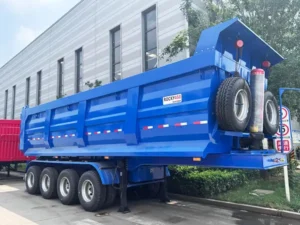
35CBM Tipper Semi Trailer Shipped To Uganda
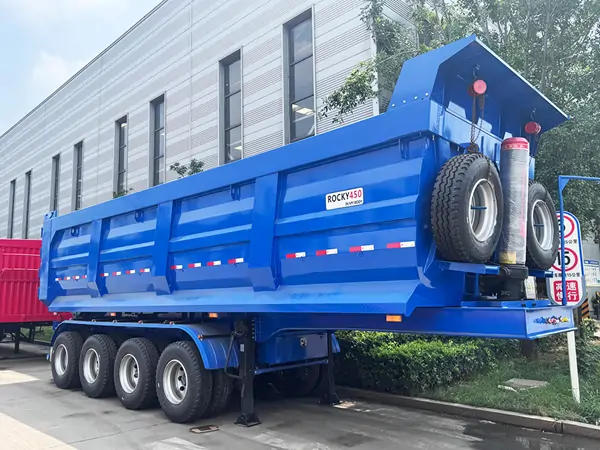
INTAI Trailer has completed the production and shipment preparation of a 35CBM Tipper Semi Trailer for a customer in Uganda.


When purchasing a trailer, many buyers focus on payload capacity, axle configuration, and cargo capacity. However, one critical component is often overlooked: the trailer suspension system. The suspension directly affects driving stability, cargo protection, tire wear, maintenance costs, and the overall lifespan of the trailer.
Whether you operate a fuel tanker trailer, flatbed trailer, dump trailer, lowbed trailer, or bulk cement tanker, selecting the right suspension for your typical road conditions can significantly improve transportation efficiency and reduce operating expenses. In many cases, the correct suspension system can save thousands of dollars in maintenance and tire replacement costs throughout the trailer’s service life.
This guide explains how to choose trailer suspension for different road conditions and transportation requirements.
Trailer suspension is the system that connects the trailer frame to its axles. Its primary purpose is to absorb road shocks and vibrations while distributing cargo weight evenly across the trailer. A well-designed suspension helps keep the tires in constant contact with the road surface, improving stability and braking performance.
Modern commercial trailers operate under a wide variety of conditions, from smooth highways to rough construction sites and mining roads. Without a suitable suspension system, excessive vibration can damage cargo, accelerate tire wear, and place additional stress on the trailer frame. Industry reports indicate that poor suspension performance can reduce tire life by more than 20% and increase maintenance costs significantly over time.
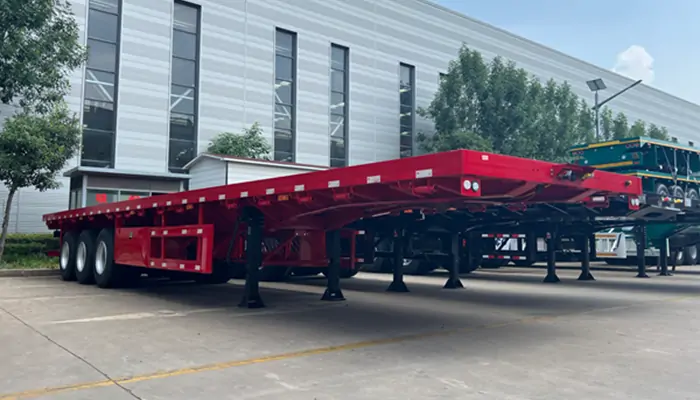
Several suspension systems are commonly used in commercial trailers today. Each design offers different advantages depending on the operating environment.
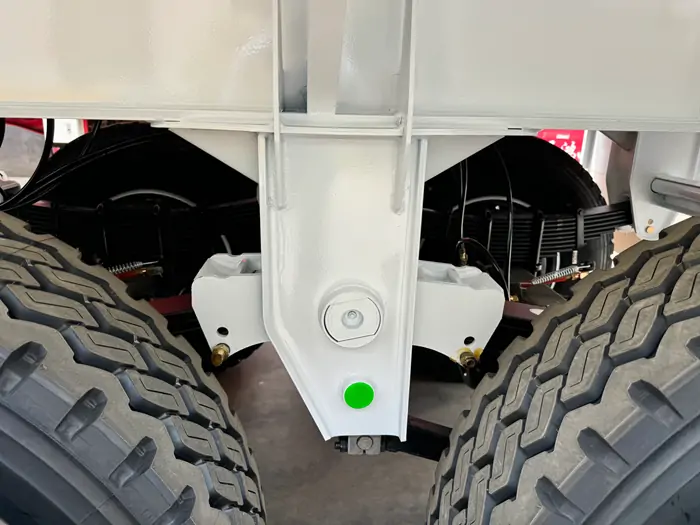
Mechanical leaf spring suspension remains the most widely used trailer suspension system worldwide. It uses multiple steel leaf springs to absorb road impacts and support heavy loads. Because of its simple structure, this suspension is highly reliable and easy to repair, making it particularly popular in developing markets where maintenance facilities may be limited.
Many fuel tanker trailers, flatbed trailers, and dump trailers use leaf spring suspension because it can handle heavy cargo while keeping purchase and maintenance costs low. Although ride comfort is not as smooth as air suspension, its durability makes it a preferred choice for demanding transportation conditions.
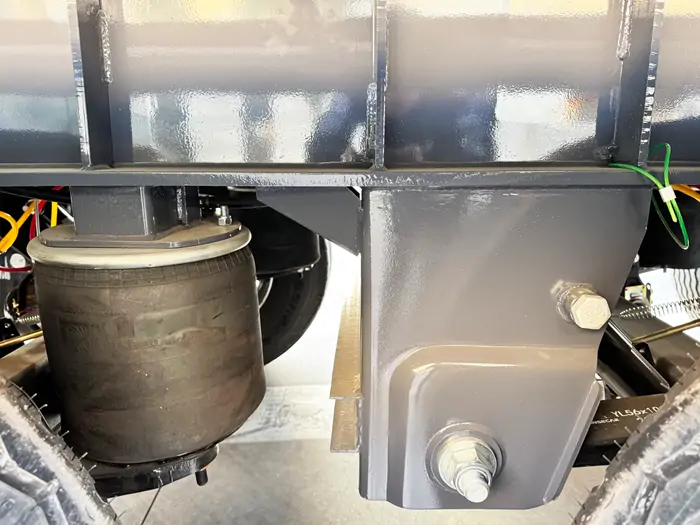
Air suspension uses inflatable air bags instead of steel springs. The air pressure automatically adjusts according to the load, allowing the trailer to maintain a consistent ride height and smoother operation.
This system significantly reduces vibration during transportation, making it ideal for sensitive cargo such as fuel, chemicals, electronics, and refrigerated products. Many long-distance transport fleets prefer air suspension because it improves vehicle stability at highway speeds and can extend tire life by reducing uneven wear. While the initial investment is higher than mechanical suspension, many operators recover the additional cost through lower maintenance expenses and improved cargo protection.
Walking beam suspension is designed for extremely demanding environments. The system allows multiple axles to share loads more evenly while maintaining better ground contact on rough terrain.
This type of suspension is commonly found on mining trailers, logging trailers, and heavy construction equipment transporters. Although it adds weight to the trailer and provides a rougher ride on paved roads, its durability under severe operating conditions is unmatched.
| Trailer Suspension Type | Load Capacity | Ride Comfort | Rough Road Performance | Initial Cost |
| Mechanical Leaf Spring Suspension | High | Medium | Excellent | Low |
| Air Suspension | High | Excellent | Good | High |
| Walking Beam Suspension | Very High | Medium | Excellent | High |
| Torsion Suspension | Low–Medium | Good | Fair | Medium |
If most transportation takes place on highways and expressways, ride quality and operational efficiency should be top priorities. Highway transport generally involves higher speeds and longer travel distances, which means vibration control becomes increasingly important.
For these applications, air suspension is often the best choice. The smoother ride reduces stress on both the trailer and the cargo while improving overall stability. Fuel tanker trailers, chemical tankers, and refrigerated trailers frequently use air suspension because it helps protect valuable cargo and improves long-distance driving performance.
In fleets that travel more than 100,000 kilometers annually, the reduction in tire wear alone can generate substantial savings over the trailer’s operating life.
Many transport companies regularly operate on both paved highways and secondary roads. In these situations, the suspension system must provide a balance between durability, comfort, and maintenance costs.
Heavy-duty mechanical suspension is often considered the most practical solution. It performs well on highways while remaining durable enough for rural roads and industrial areas. This type of suspension is commonly installed on flatbed trailers, container chassis trailers, and general cargo trailers.
For operators who require reliable performance without the higher cost of air suspension, reinforced leaf spring suspension remains one of the most economical choices.
Construction sites create some of the most challenging conditions for trailers. Vehicles frequently encounter potholes, uneven surfaces, loose gravel, and temporary access roads that place heavy stress on suspension components.
In these environments, durability becomes more important than ride comfort. Reinforced mechanical suspension or walking beam suspension can better withstand repeated impacts and heavy loads. Dump trailers transporting sand, gravel, crushed stone, and construction materials often use these systems because they can tolerate harsh working conditions while maintaining structural integrity.
Companies involved in infrastructure projects often prioritize suspension strength over comfort because downtime caused by suspension failure can result in costly project delays.
Mining roads are among the harshest environments in the transportation industry. Large rocks, deep ruts, steep slopes, and overloaded conditions place enormous pressure on trailers and suspension systems.
Walking beam suspension is generally regarded as the best option for mining applications. Its design allows better axle articulation and improved load distribution, reducing the risk of component failure when traveling across uneven terrain. Although the system is heavier and more expensive than standard suspension designs, its ability to operate reliably in extreme conditions makes it the preferred choice for mining companies worldwide.
When equipment reliability directly affects production efficiency, investing in a stronger suspension system often proves more economical in the long run.
| Road Condition | Recommended Suspension | Main Reason |
| Highways & Expressways | Air Suspension | Better comfort, stability, and vibration control |
| Highways + Rural Roads | Mechanical Leaf Spring | Good balance of durability and cost |
| Gravel & Construction Roads | Reinforced Mechanical Suspension | Strong impact resistance and easy maintenance |
| Mining & Extreme Off-Road Roads | Walking Beam Suspension | Excellent load distribution and terrain adaptability |
| Light-Duty Paved Roads | Torsion Suspension | Smooth ride and simple structure |
Despite the growing popularity of air suspension, mechanical suspension continues to dominate many transportation markets, especially in Africa, the Middle East, Southeast Asia, and parts of Latin America.
The main reason is practicality. Mechanical suspension systems are less expensive to purchase, easier to repair, and require fewer specialized components. Spare parts are widely available, and local mechanics can often perform repairs without advanced diagnostic equipment.
For operators working in remote regions where road conditions are unpredictable and maintenance resources are limited, mechanical suspension provides a dependable and cost-effective solution. This is why many INTAI Trailer fuel tanker trailers, flatbed trailers, and dump trailers continue to use reinforced heavy-duty mechanical suspension systems specifically designed for challenging operating environments.
Choosing the right trailer suspension is one of the most important decisions when purchasing a commercial trailer. The ideal suspension system depends on road conditions, cargo type, operating distance, and maintenance requirements. Air suspension is generally the best option for long-distance highway transportation and sensitive cargo. Mechanical leaf spring suspension offers excellent durability and cost efficiency for general freight applications.
By carefully evaluating your transportation needs before purchasing a trailer, you can select a suspension system that improves safety, reduces operating costs, extends equipment lifespan, and delivers better long-term profitability. Understanding how to choose trailer suspension correctly will help ensure your trailer performs efficiently regardless of the roads it travels.
Contact INTAI Trailer Today for expert advice and a customized suspension solution for your trailer.
INTAI Trailer has completed the production and shipment preparation of a 35CBM Tipper Semi Trailer for a customer in Uganda.
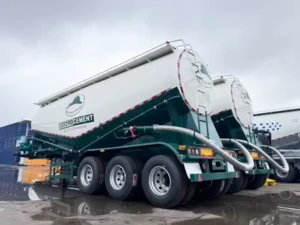
INTAI Trailer has successfully completed the production and delivery of 3 Axle Cement Bulker Trailers, which is prepared for shipment
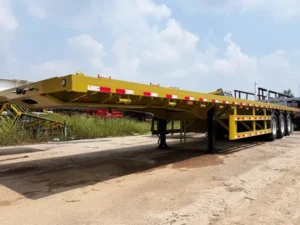
INTAI Trailer recently completed the production and delivery of 3 Axle Flatbed Semi Trailers Shipped To Rwanda, providing a reliable transportation