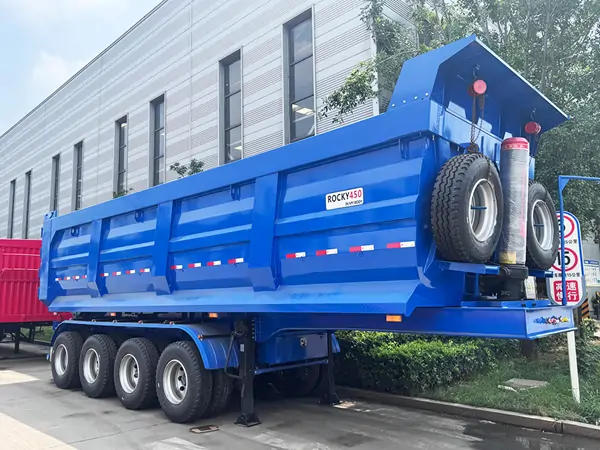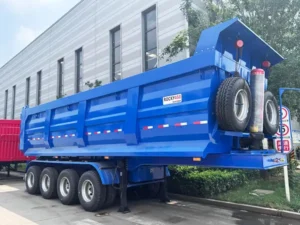
35CBM Tipper Semi Trailer Shipped To Uganda
INTAI Trailer has completed the production and shipment preparation of a 35CBM Tipper Semi Trailer for a customer in Uganda.


Quick Answer
Before purchasing dump trucks and trailers, it is essential to fully understand the differences, advantages, and disadvantages of both. Making the right choice can reduce transportation costs by 30-40% and increase efficiency by up to 50%.
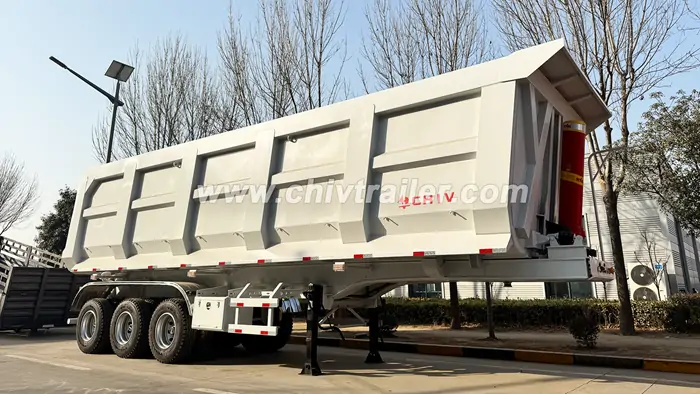
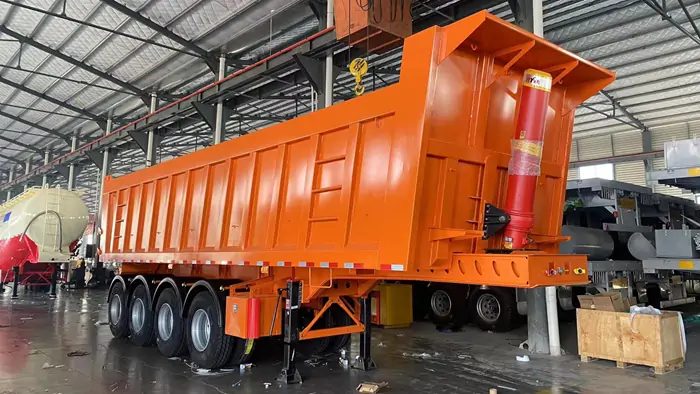
A rear-dump trailer is a type of semi-trailer specifically designed for transporting bulk materials. It is not powered by its own engine and requires a tractor unit to pull it. It uses a hydraulic lifting system for unloading from the rear. It is mainly used to transport bulk goods such as ore, sand, stone, and coal. Compared to dump trucks, it has a larger capacity and higher transport efficiency.
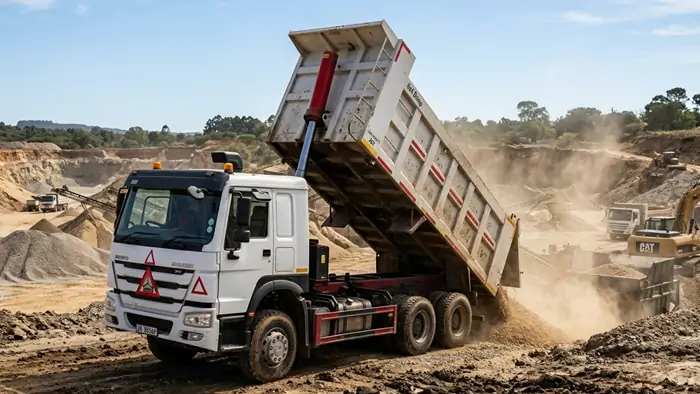
A dump truck is a heavy-duty vehicle with an integrated chassis and cargo box. It relies on the vehicle’s own power to drive a hydraulic lifting mechanism, tilting the cargo box at a certain angle to achieve automatic unloading of goods. Unlike dump trailers, dump trucks are independent motor vehicles that do not require an additional tractor, making them ideal for short-distance bulk cargo transportation.
| Feature | End Dump Trailer | Dump Truck |
| Load Capacity | 30–100 tons | 10–40 tons |
| Cost per Ton | Low | High |
| Power Source | Tractor required | Self-powered |
| Best Distance | Long-distance | Short-distance |
| Flexibility | Detachable | Fixed |
| Maintenance | Low | High |
| Metric | Dump Truck | End Dump Trailer |
| Trips per Day | 5–6 | 2–3 |
| Fuel Cost | Higher | Lower |
| Labor Cost | Higher | Lower |
| Efficiency | Lower | Higher |
Conclusion: For long-distance bulk cargo transportation, dump trailers offer higher transportation efficiency and can bring about a higher return on investment.
A dump trailer can be flexibly separated from the tractor unit, while a dump truck is a single unit that cannot be separated; this is the fundamental difference between the two. For example, if you work in the construction industry and currently use two tractor units, and you need to tow a dump trailer or other semi-trailer such as a low-bed trailer, you must undoubtedly choose a dump trailer.
Select “End Dump Trailer”:
– Loading capacity greater than 40 tons
– Distance greater than 50 kilometers
– Bulk materials
– Mining areas, long-distance transportation, port transportation
Select “Dump Truck”:
– Loading capacity less than 40 tons
– Distance less than 50 kilometers
– Urban or construction site
For more information about dump trailers or trucks, please contact us.
INTAI Trailer has completed the production and shipment preparation of a 35CBM Tipper Semi Trailer for a customer in Uganda.
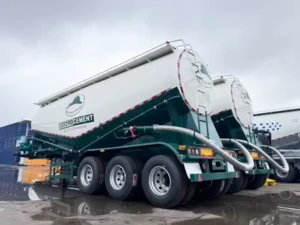
INTAI Trailer has successfully completed the production and delivery of 3 Axle Cement Bulker Trailers, which is prepared for shipment
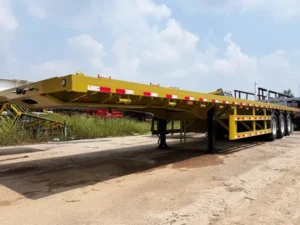
INTAI Trailer recently completed the production and delivery of 3 Axle Flatbed Semi Trailers Shipped To Rwanda, providing a reliable transportation