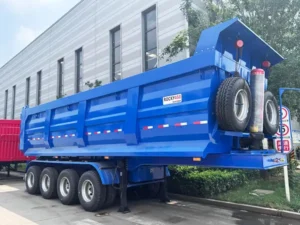
35CBM Tipper Semi Trailer Shipped To Uganda
INTAI Trailer has completed the production and shipment preparation of a 35CBM Tipper Semi Trailer for a customer in Uganda.


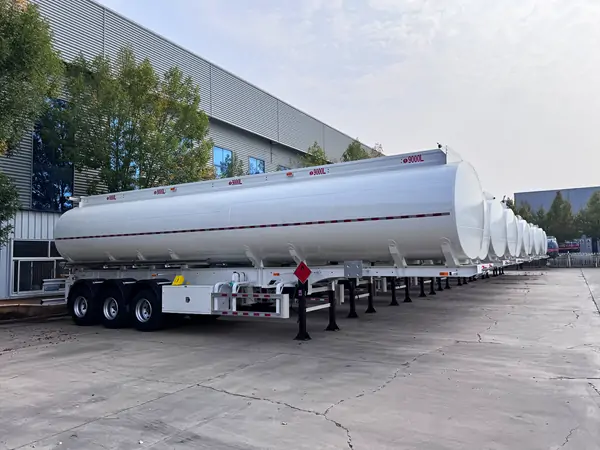
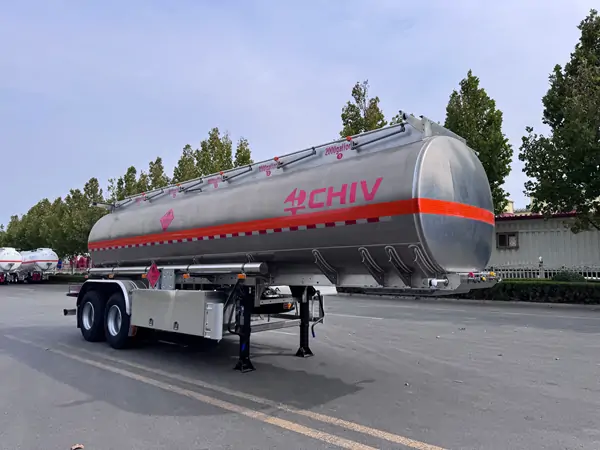
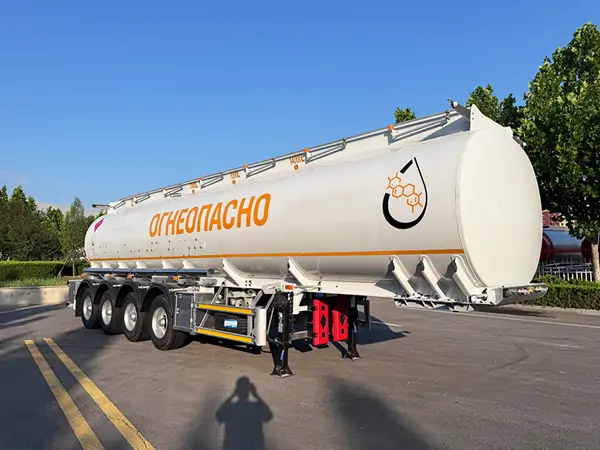
A fuel tanker trailer, also known as a oil transport vehicle, is a special type of vehicle designed to transport gasoline, diesel, kerosene, crude oil, and various liquid chemicals or industrial fluids. It is shaped like a circular tank and is made of carbon steel, aluminum alloy, or stainless steel. Tanker trailers may vary depending on the application and national policies. This article will provide a detailed introduction to petrol tank semi trailers based on their intended use:
1. Fuel tank trailer: This is the most common large vehicle you see on highways and a core product of manufacturers like chivtrailer.com. Structure: A huge, stand-alone tank is towed by a tractor unit. Capacity: Typically between 20,000 liters and 60,000 liters.
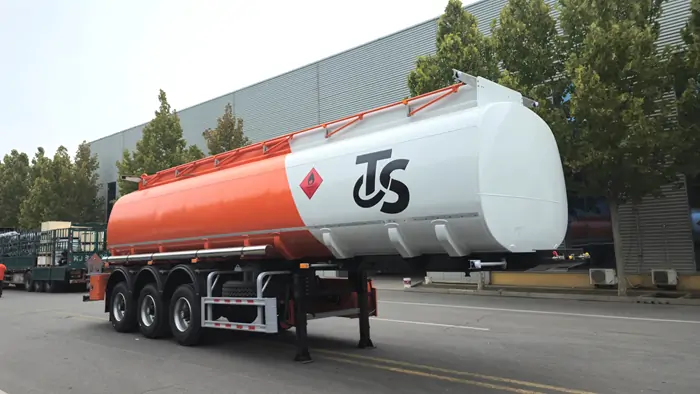
Core advantages: Suitable for oil refinery transportation, cross-border oil transportation, and long-distance transportation from large oil depots to gas stations. Large capacity and higher transport efficiency.
2. Rigid Fuel Tank Truck: Unlike a trailer, its tank is directly fixed to the truck chassis; the tractor unit and tank are integrated. Capacity: Approximately 5,000 to 20,000 liters. Capacity is approximately 5,000 liters to 20,000 liters. Key advantages: High flexibility and small turning radius; more suitable for fuel distribution in cities and supplying fuel to small street gas stations or internal enterprise oil depots.
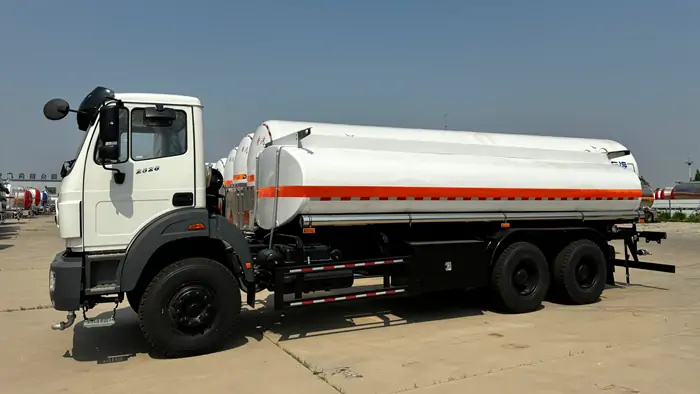
3. Mobile refueling truck: This type of vehicle not only transports fuel but also carries its own refueling machine, functioning similarly to a gas station. The tanker truck is equipped with a refueling machine, flow meter, hose reel, and fuel nozzle on its side or rear. These fuel transport vehicles are mainly used in construction sites, mines, airports, or farms; they can directly refuel excavators, bulldozers, or mining machinery, saving the time that machinery would otherwise have to travel to gas stations.
4. Aircraft Refueling Truck: This is a highly specialized vehicle used specifically for airport tarmacs.
Types: Tank Refueling Truck: Has its own tank.
Hydrant Dispenser: It does not carry its own tank, but connects to the underground oil pipeline network of the airport, and pressurizes oil into the aircraft’s fuel tank through pumps and filtration systems.
Aircraft refueling trucks have extremely strict requirements for fuel filtration accuracy and pressure control.
In the field of fuel transportation, tanker trucks are equipped with two types of partitions: bulkheads and splash guards. These two types of partitions serve completely different purposes, and will be described in detail below.
The core advantages of installing baffles:
1. Improved driving stability and safety: The main function of baffles is to reduce the “swaying effect” caused by braking and turning of the tanker truck. The design of multiple baffles reduces the impact of liquid on the tank body.
2. Protection of tank structural integrity: The bulkheads divide the interior of the tank into multiple relatively independent small spaces, distributing the direct impact force of liquid on the tank head (both ends) and welded joints to each bulkhead, effectively extending the service life of the tank.
3. Optimized braking and acceleration performance and shortened braking distance: During emergency braking, without bulkheads, tons of liquid would instantly surge forward of the tank, generating a huge thrust that “pushes” the tractor forward, increasing the braking distance. Bulkheads effectively suppress this forward thrust.
The core advantages of installing bulkheads:
1. Separating multiple independent compartments: The main function of bulkheads is to divide the tanker trailer into multiple independent compartments, which can meet the needs of simultaneously transporting multiple types of oil and avoid oil mixing.
For those pursuing ADR or Oil tank trucks meeting high international standards such as ASME have strict requirements regarding the installation location, opening size, and welding process of the baffles to the tank body, in order to balance “baffle effectiveness” and “ease of cleaning.”
When purchasing oil tank trucks, do you prefer a multi-compartment, independent space design, or a solution with multiple baffles installed throughout the same compartment?
In today’s highly competitive fuel hauler industry, choosing the right fuel tank trailer directly impacts the fleet’s operational efficiency, safety, compliance, and ultimately, return on investment (ROI). Below, we’ll guide you on how to select a tanker trailer from different perspectives, including the transportation environment and road regulations.
1.How should you choose the right tanker trailer for different road conditions?
2.Fuel tanker trailers are completely customized products. Please provide your country’s regulations and policies to obtain the optimal fuel tanker trailer design solution.
According to industry standards and technical requirements for high-specification tank trailers, the lifespan and maintenance cycle of tank trailers mainly depend on their manufacturing process, the quality of core components, and the transportation environment. The following is a detailed analysis based on professional manufacturing standards and a global logistics operations perspective:
Design life of oil tanker trailer:
The lifespan of a tanker truck is closely related to its structural design and material selection:
Aluminum alloy tanker trucks: They possess excellent corrosion resistance and are not prone to rust. Even after 10 years of operation, the aluminum alloy tank still has a very high residual value.
Carbon steel tank trucks: Although they are strong, they are prone to rust. Its lifespan largely depends on the quality of maintenance of the internal anti-corrosion coating.
Structural protection: Installing internal baffles is key to extending the lifespan. It can reduce liquid shock, reduce metal fatigue and weld cracks, thereby ensuring the long-term structural integrity of the tank.
Economic life cycle: When conducting total cost of ownership (TCO) analysis, a major operating and depreciation calculation cycle is usually 5-10 years. However, High-quality Chinese-made gasoline tanker trailers can serve for a longer period of time with proper maintenance.
Tanker trailer maintenance cycle:
1. Routine/Short-Term Inspections (Weekly)
Sealing Check: Check for leaks in the API discharge valve, subsea valve, and manhole cover.
Walking mechanism: Check tire pressure and whether the axle bolts are loose.
2. Regular system maintenance (every 3-6 months) Axle and suspension: Lubrication and maintenance of the axle. For air suspension, the air bag pressure needs to be checked; for leaf spring suspension, the leaf spring wear needs to be checked.
Safety system test: Test the linkage sensitivity of the emergency shut-off valve (sea valve) to ensure that the oil circuit can be cut off instantly in the event of an accidental impact.
Oil and gas recovery system: Check the vacuum pressure valve and the oil and gas recovery pipeline for unobstructed flow.
3. Annual Special Inspection (Every 12 Months)
Tank Flaw Detection and Pressure Testing: Conduct hydrostatic or pneumatic pressure tests according to international standards to check for hidden cracks in the welds.
Internal cleaning and inspection: Personnel enter the tank to check the condition of the baffles and whether the internal coating is intact.
INTAI Trailer has completed the production and shipment preparation of a 35CBM Tipper Semi Trailer for a customer in Uganda.
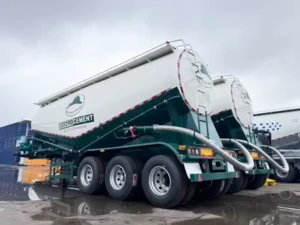
INTAI Trailer has successfully completed the production and delivery of 3 Axle Cement Bulker Trailers, which is prepared for shipment
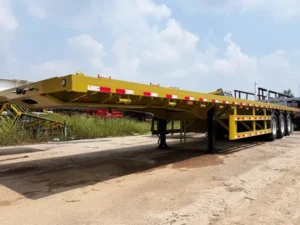
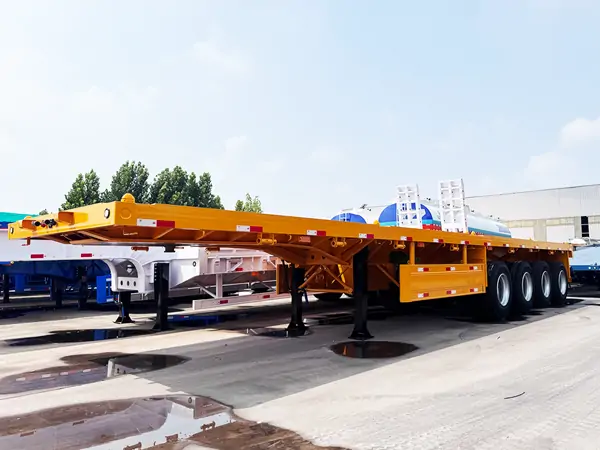
INTAI Trailer recently completed the production and delivery of 3 Axle Flatbed Semi Trailers Shipped To Rwanda, providing a reliable transportation