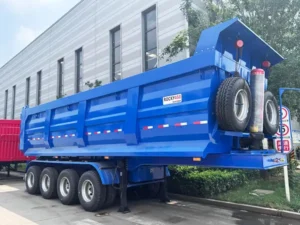
35CBM Tipper Semi Trailer Shipped To Uganda
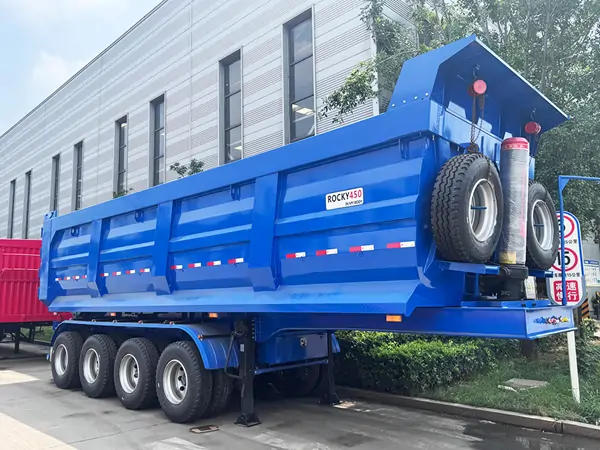
INTAI Trailer has completed the production and shipment preparation of a 35CBM Tipper Semi Trailer for a customer in Uganda.


Corrosion prevention during sea transport has always been a hot topic of concern for many customers. During sea transport, salt spray, high humidity, and extreme temperature changes can cause oxidation and rust on the metal parts of semi-trailers. These conditions are especially harmful during long ocean voyages of 30–45 days. To keep the vehicles in their original factory condition after transoceanic shipping, manufacturers usually apply a series of systematic anti-corrosion measures.
This is currently the most common and cost-effective method for protecting semi-trailers intended for export.
Key Procedure: Prior to shipment, a high-pressure spray gun is used to apply a 1–2 mm thick layer of specialized industrial anti-rust wax to the vehicle’s exterior surfaces and chassis.
Critical Areas: Coverage must specifically include the axles, wheel hubs, leaf spring suspension, main beam webs, and all exposed bolts.
Advantages: This wax layer forms a tough, hydrophobic film that effectively prevents direct physical contact between corrosive salt spray and the metal surfaces. Upon the vehicle’s arrival at its destination, the customer can easily remove the coating using a high-pressure washer in conjunction with a wax-removal agent.
Cover the semi-trailer with plastic sheeting to minimize direct contact between the vehicle and seawater.
For powder tankers and fuel tankers, it is imperative to securely seal all intake and exhaust ports, as well as discharge valves, to prevent moisture from entering the interior of the tank.
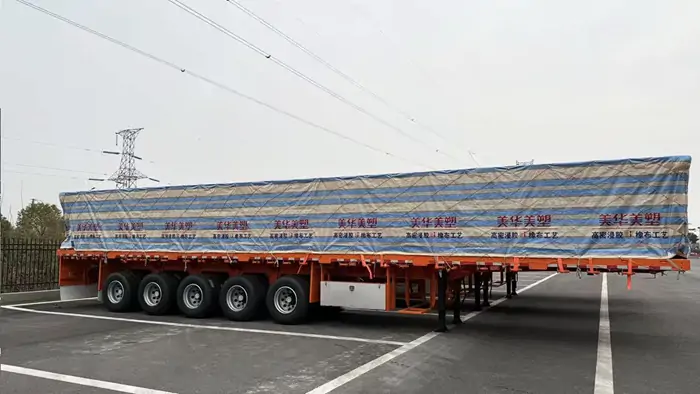
Landing Gear Securing: Raise the landing gear to the same level as the cargo deck and lock it securely. For low-bed trailers, adjust the landing gear height to lower the gooseneck. During Roll-on/Roll-off (Ro-Ro) shipping, make sure the landing gear stays stable and secure. For Flat Rack container transport, retract the landing gear and support it with wooden blocks.
Tire Pressure: Slightly reduce tire pressure (typically to 70%–80% of normal driving pressure) to cushion against vibrations during transit and to mitigate pressure fluctuations caused by temperature changes.
Braking System: Ensure that the parking brake (handbrake) is fully engaged.
Removal of Fragile Parts: It is recommended to remove items such as side mirrors, easily detachable light fixtures, or valuable accessories stored in the vehicle’s toolbox. These items should be placed inside the cab or the toolbox and securely locked away to prevent loss or damage from collisions during sea transit.
Spare tire reinforcement: Check if the spare tire rack is locked. If necessary, add wire or cable ties for secondary reinforcement to prevent it from falling off during bumpy rides.
Bulk Carriers / Ro-Ro Vessels: It is mandatory to ensure that clearly marked lashing points are visible on the vehicle body. Seafarers would use these locations to secure vehicles to the deck or hold with chains.
Containers/flat racks: When transporting multiple units in an overlapping (back-to-back) configuration, check the welding strength of the support frame. Add wooden blocks to the vehicle’s stress points to prevent paint damage and beam deformation.
INTAI Trailer has completed the production and shipment preparation of a 35CBM Tipper Semi Trailer for a customer in Uganda.
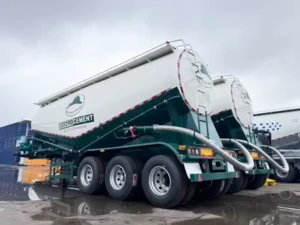
INTAI Trailer has successfully completed the production and delivery of 3 Axle Cement Bulker Trailers, which is prepared for shipment
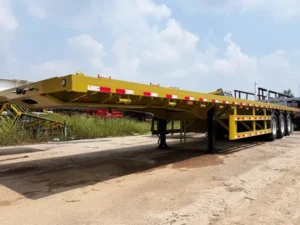
INTAI Trailer recently completed the production and delivery of 3 Axle Flatbed Semi Trailers Shipped To Rwanda, providing a reliable transportation