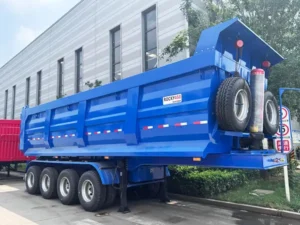
35CBM Tipper Semi Trailer Shipped To Uganda
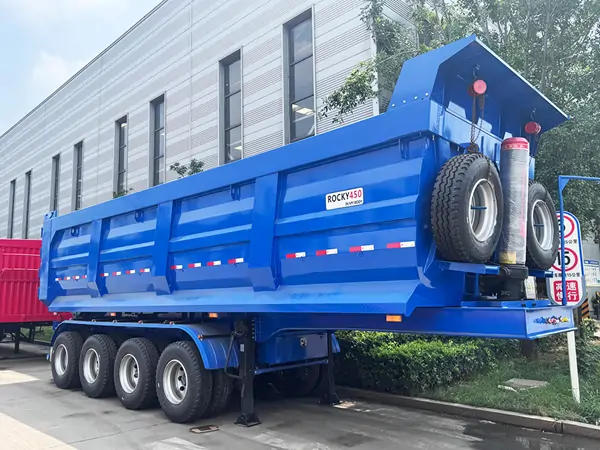
INTAI Trailer has completed the production and shipment preparation of a 35CBM Tipper Semi Trailer for a customer in Uganda.


For logistics companies and fuel distributors, efficiency and safety during fuel delivery are paramount. Improper unloading not only wastes valuable time but also poses severe environmental and safety hazards.
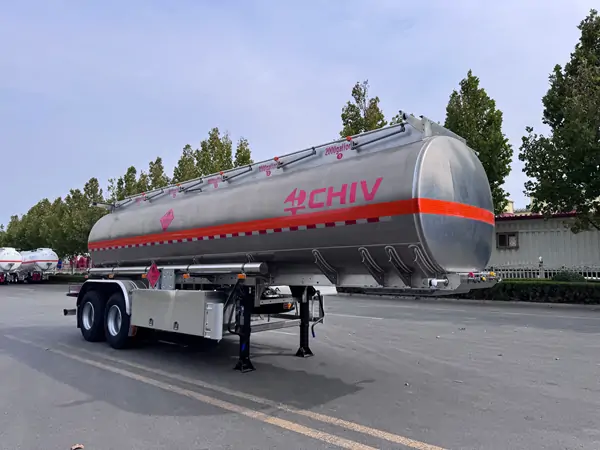
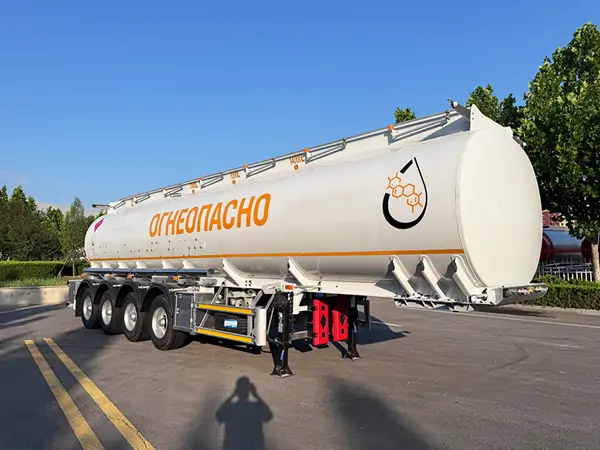
As a professional manufacturer with over 20 years of experience in producing high-quality fuel tank semi trailers, we have designed our tankers to make the discharging process as seamless and safe as possible. In this guide, we will walk you through the correct, standard procedure for unloading oil from a tanker trailer, highlighting the premium features that set our equipment apart.
Before cracking open any valves, safety protocols must be strictly followed:
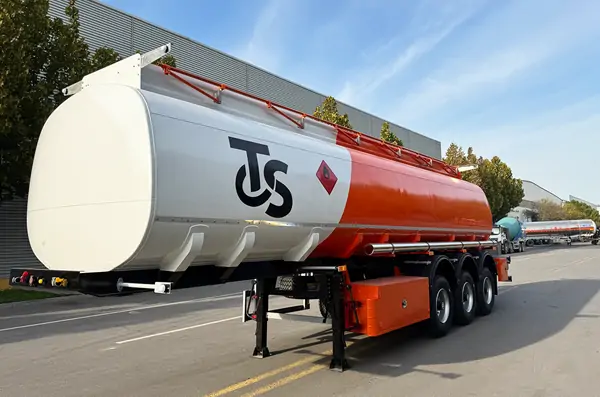
Our oil tanker trailers come equipped with two 3-inch diameter, 6-meter-long discharge hoses as standard. This length and diameter are optimized to satisfy standard gravity-fed unloading requirements.
Handling Variable Pipe Sizes: If the storage tank’s inlet or your alternative hose uses a different size, don’t worry. We also provide 4-inch to 3-inch reducer adapters. This allows operators to easily adapt and connect to various hose and pipe configurations on-site without hassle.
If your country’s environmental regulations require it, or if you selected our optional Oil and Gas Recovery System, you should open the valve before discharging the liquid.
Why choose this option? The oil and gas recovery system creates a closed-loop circuit. As the oil leaves the tanker, the displaced gas from the storage tank is safely drawn back into the trailer. This prevents harmful fuel vapors from escaping into the atmosphere and maintains a safe, balanced pressure inside the compartment.
Note:
This is where our trailer’s premium engineering shines. Every single compartment of our tanker is equipped with an independent, European standard aluminum alloy 4-inch API discharge valve as a standard configuration.
Once all connections are verified tight: Slowly open the external API discharge valves to let the oil flow.
Using our standard setup (4-inch API valve + 3-inch hose), you can efficiently unload oil using natural gravity. This is the most reliable, zero-energy-cost method for standard underground storage tanks.
For clients looking to significantly speed up their turnaround time, or those who need to pump fuel into above-ground storage tanks, we offer customized pump solutions as an optional upgrade:
Incorporating a pump drastically accelerates the unloading flow rate, minimizes truck downtime, and maximizes your fleet’s daily delivery efficiency.
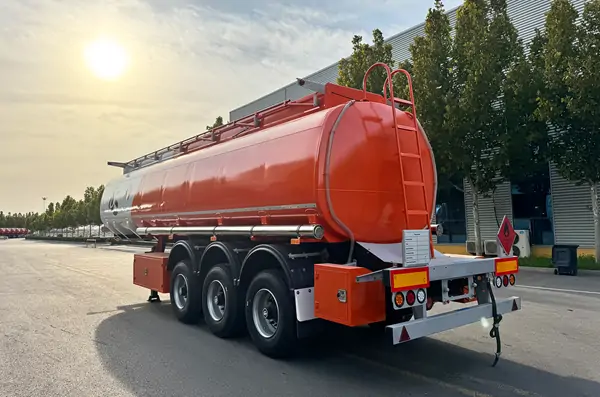
At our factory, we understand that a tanker trailer is a long-term investment. That’s why we don’t cut corners:
Looking to upgrade your fuel transport fleet?
Contact our sales team today to get a customized quote and technical specifications tailored to your region’s regulations!
INTAI Trailer has completed the production and shipment preparation of a 35CBM Tipper Semi Trailer for a customer in Uganda.
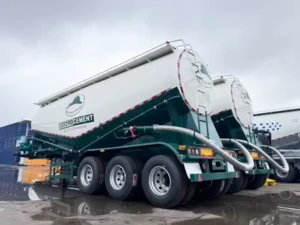
INTAI Trailer has successfully completed the production and delivery of 3 Axle Cement Bulker Trailers, which is prepared for shipment
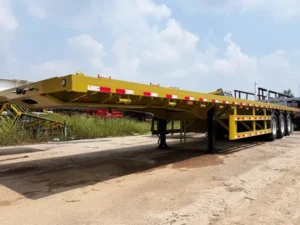
INTAI Trailer recently completed the production and delivery of 3 Axle Flatbed Semi Trailers Shipped To Rwanda, providing a reliable transportation