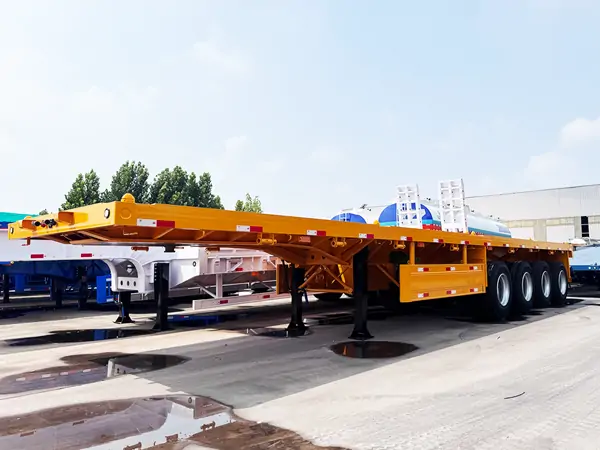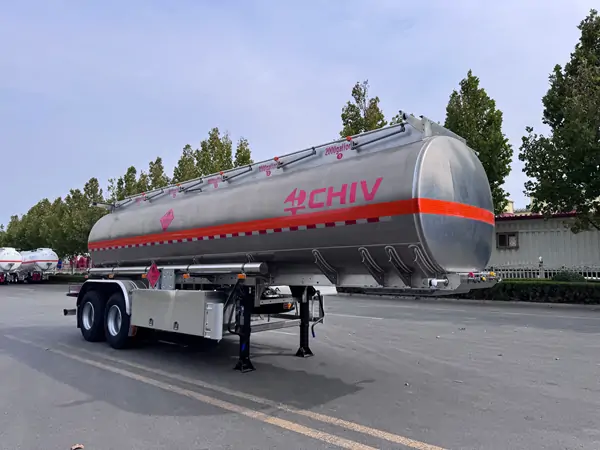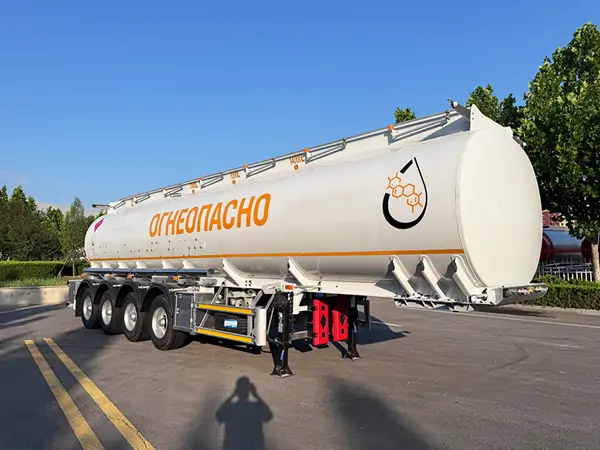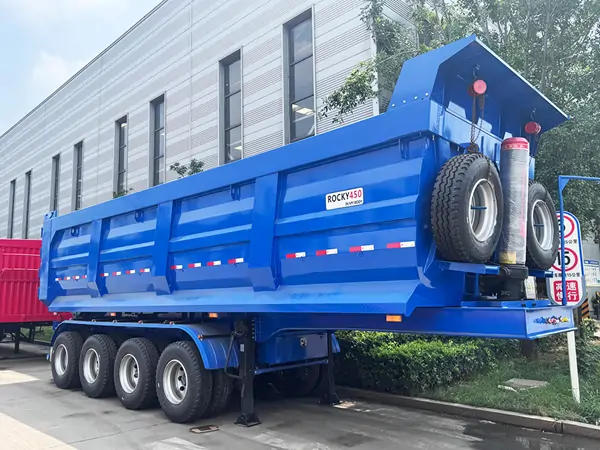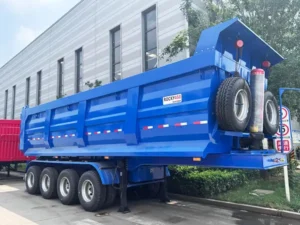
35CBM Tipper Semi Trailer Shipped To Uganda
INTAI Trailer has completed the production and shipment preparation of a 35CBM Tipper Semi Trailer for a customer in Uganda.


API: Refers to the American Petroleum Institute. In the valve industry, “API valve” usually refers to a valve that conforms to API-related design, manufacturing and testing standards, and is particularly suitable for the storage and transportation of petroleum and petrochemical products (such as gasoline, diesel, aviation kerosene, etc.). It represents high performance, high security, and standardization.
Discharge valve: Installed at the bottom of the tank trailer, it is a key device used to control the discharge of liquid from the tank. It is not a single valve but an integrated valve system.
Normally, fuel loading is done through the manhole cover on the top of the tank trailer, requiring manual climbing, which is cumbersome and poses safety hazards. API discharge valves allow for bottom loading and unloading of fuel, making them increasingly popular in modern tank trailers. Furthermore, API discharge valves can be equipped with flow meters and fuel samplers. API discharge valves also meet API standards and offer advantages such as safety, efficiency, and excellent sealing.

API main structure and components:
1.Sampling Valve:
Type: Small ball valve or needle valve.
Function: Takes a liquid sample before or during unloading for quality testing.
2.Pneumatic Emergency Safety Bottom Valve:
Location: The main valve is located at the lowest point of the tank. The pneumatic switch is located in the toolbox.
Function: In the event of an accident (such as a trailer overturning, pipeline rupture, or fire), the main valve can be quickly closed via a manual pneumatic button to prevent fuel leakage.
Common Standard Sizes The interface sizes of API unloading valves on tank trailers are typically standardized, expressed in inches (inches) or millimeters (mm). The most common are:
2-inch (2″ – DN50): Commonly used for unloading small tank trucks, auxiliary tanks, or as sampling ports or vents.
3-inch (3″ – DN80): Currently the most mainstream and widely used size. Suitable for most standard tank trucks (such as vehicles carrying gasoline and diesel), achieving a good balance between flow rate and safety.
4-inch (4″ – DN100): Used for large tank trucks requiring higher flow rates or for specific media (such as certain low-viscosity chemicals). Also common in some regions or specific fields (such as aviation fuel refueling).
6-inch (6″ – DN150) or larger: Primarily used for rapid loading and unloading of extra-large volume tank trucks, railway tank cars, or stationary storage tanks; less common on road tank trailers.
Typically, fuel-powered trailers come with various sizes of adapters included, allowing for easy switching between different diameters to meet the loading and unloading needs of different oil depots or gas stations.
INTAI Trailer has completed the production and shipment preparation of a 35CBM Tipper Semi Trailer for a customer in Uganda.
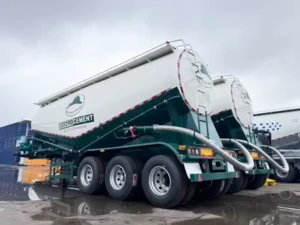
INTAI Trailer has successfully completed the production and delivery of 3 Axle Cement Bulker Trailers, which is prepared for shipment
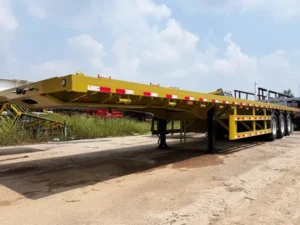
INTAI Trailer recently completed the production and delivery of 3 Axle Flatbed Semi Trailers Shipped To Rwanda, providing a reliable transportation