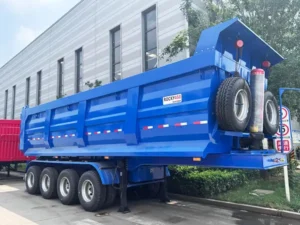
35CBM Tipper Semi Trailer Shipped To Uganda
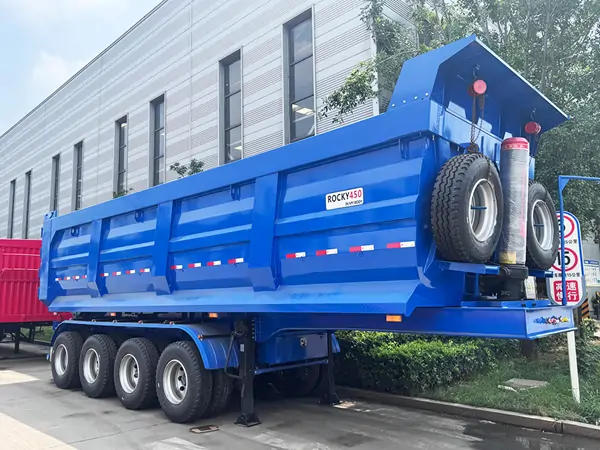
INTAI Trailer has completed the production and shipment preparation of a 35CBM Tipper Semi Trailer for a customer in Uganda.


The key to choosing a container trailer lies in matching it to your transportation needs, container specifications, road regulations, and operating costs. Although container trailers have a simple structure, their load-bearing capacity and flexibility vary greatly depending on the design.
The following is a guide to selecting container trailers for your reference:
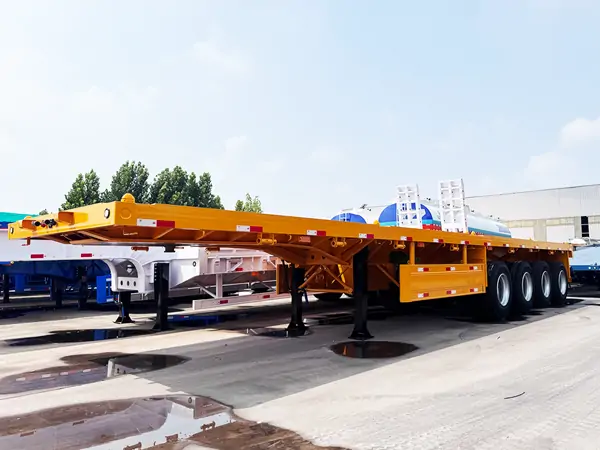
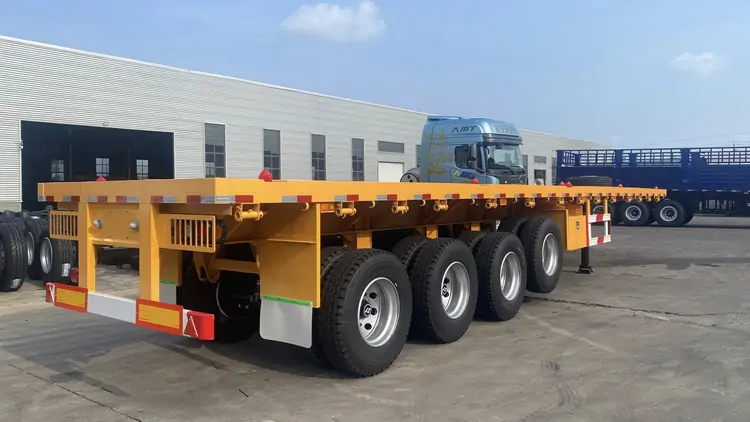
1. Flatbed trailers are the most common type of container transport trailers. They are versatile and can transport not only containers but also some bulk cargo, such as bagged cement, small machinery, and building materials. If you need to transport more than just containers, then a flatbed trailer is your best choice.
2. Skeleton/Chassis Trailers: Skeleton trailers are semi-trailers specifically designed for transporting containers. They are lightweight and suitable for pure container transport from port terminals to warehouses.
| Number of containers | Number of locks |
| One 40-foot container | 4 sets of container locks |
| One 20-foot container | The first, last, and four middle locks are all left unlocked. |
| Two 20-foot containers | A total of 12 container locks are used (rows 1 and 2 are used in the front container; rows 3 and 4 are used in the rear container). |
1.If you are only transporting 20-foot containers, you only need to select a 20-foot container chassis and configure four container locks.
2.If it is required that the flatbed trailer can transport 20-foot or 40-foot containers, 12 locks need to be equipped.
3.Of course, if you need to transport containers of different sizes such as 20, 40, and 45 feet at the same time, we recommend that you purchase a retractable flatbed trailer or skeleton trailer, which can adjust the chassis size at will, and one vehicle can be used as three vehicles.
1.The material for the flatbed trailer is limited to T700 steel. This material offers high strength while being lighter in weight, resulting in greater fuel savings during long-term transportation.
2.Inspect the supplier’s welding process, especially whether the welds on the main beams are smooth and continuous. It is recommended to choose a manufacturer that uses fully automated submerged arc welding technology, as it results in higher welding strength and better fatigue resistance.
3.Verify that the parts used by the manufacturer are genuine to avoid being scammed.
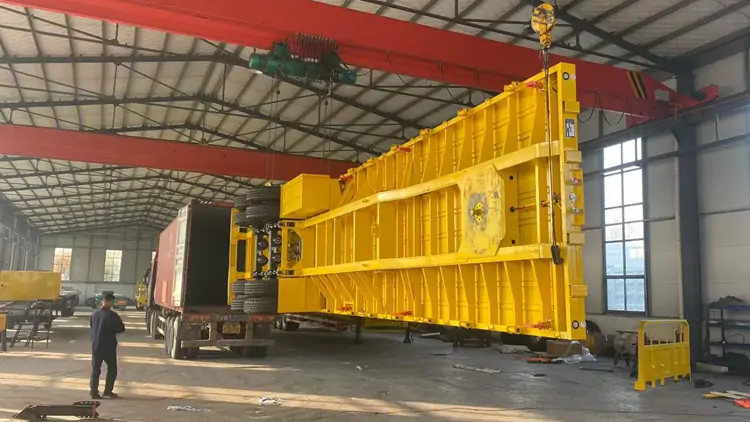
In summary: The first step is to verify the weight restrictions in your region, and then confirm the dimensions of the shipping container to determine the placement of the container locks.
INTAI Trailer has completed the production and shipment preparation of a 35CBM Tipper Semi Trailer for a customer in Uganda.
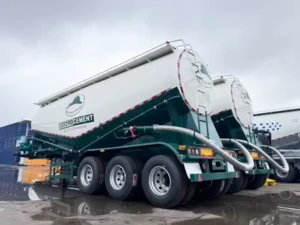
INTAI Trailer has successfully completed the production and delivery of 3 Axle Cement Bulker Trailers, which is prepared for shipment
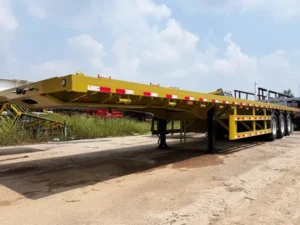
INTAI Trailer recently completed the production and delivery of 3 Axle Flatbed Semi Trailers Shipped To Rwanda, providing a reliable transportation