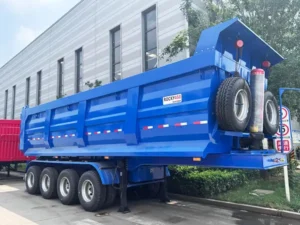
35CBM Tipper Semi Trailer Shipped To Uganda
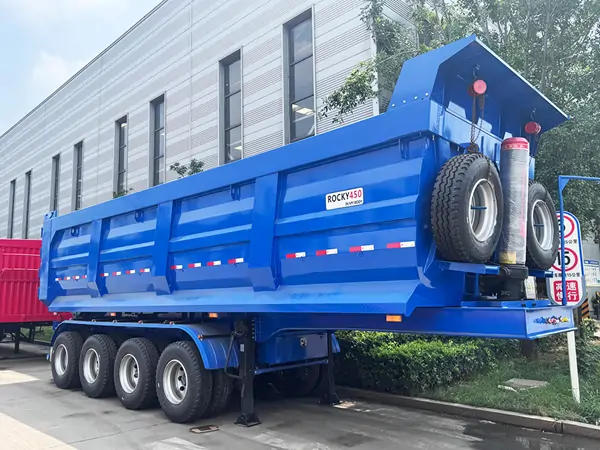
INTAI Trailer has completed the production and shipment preparation of a 35CBM Tipper Semi Trailer for a customer in Uganda.


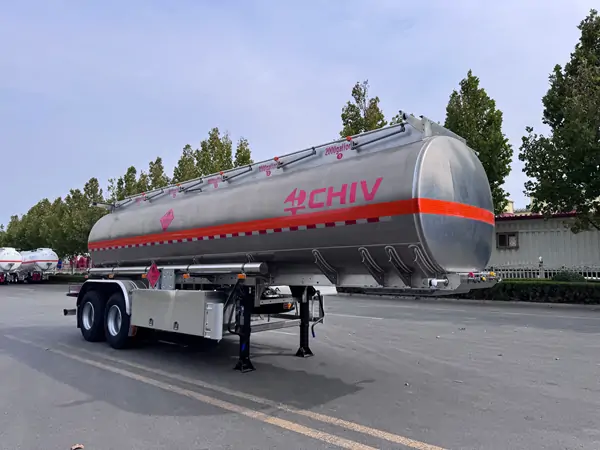
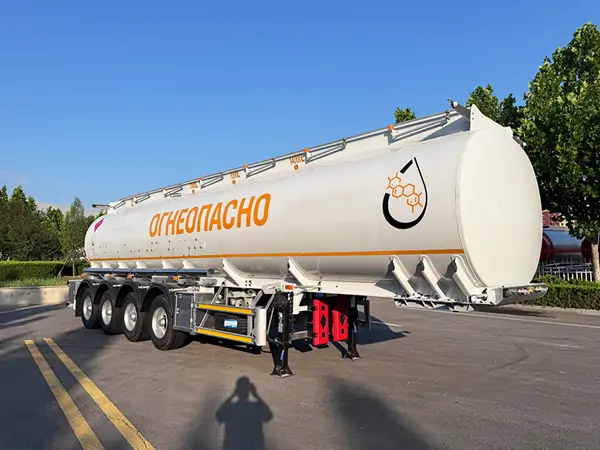
For fuel distributors, logistics operators and fleet owners, a reliable fuel tanker trailer directly defines transport safety, operational uptime and long-term total cost. Poor craftsmanship causes leaks, structural failure and costly downtime. As a leading Chinese tanker trailer manufacturer, INTAI Trailer follows a strict, standardized production workflow for every fuel tanker semi-trailer, combining automated robotic lines and multi-stage quality inspection to meet international hazardous-goods transport standards , with full customization for volume, compartments, axles and accessories.
Everything starts with qualified raw materials. INTAI selects high-strength carbon steel, stainless steel or 5182 aluminum alloy according to client requirements, suitable for diesel, gasoline and other liquid fuel transportation.
Plates are cut by CNC plasma cutting machines to exact dimensions based on customer technical drawings. Thickness is strictly controlled: tank shell plates, dished heads and anti-surge baffles all follow export-grade specifications. Unqualified materials are rejected before entering production to avoid hidden risks in later stages.
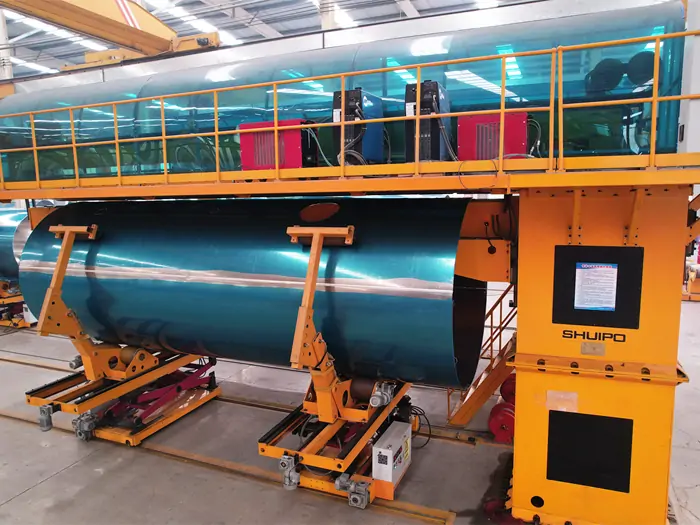
Cut metal sheets go to the rolling machine and are rolled into cylindrical tank shells. Dished heads (front and rear tank ends) are hydraulically pressed into shape, usually thicker than the tank shell to resist internal liquid impact during bumpy road transport.
At INTAI, dimensional accuracy is checked after forming. Deviations will cause uneven stress and early fatigue during long-distance operation on rough African, Central Asian or Latin-American roads.
Anti-surge wave baffles and compartment partitions are installed inside the tank body. These components reduce liquid surge when braking or cornering, greatly improving driving stability and safety.
INTAI supports 1–9 independent compartments, allowing customers to carry different fuel types in one trailer and prevent cross-contamination. Every baffle and partition is positioned and fixed per drawing standards before welding work proceeds.
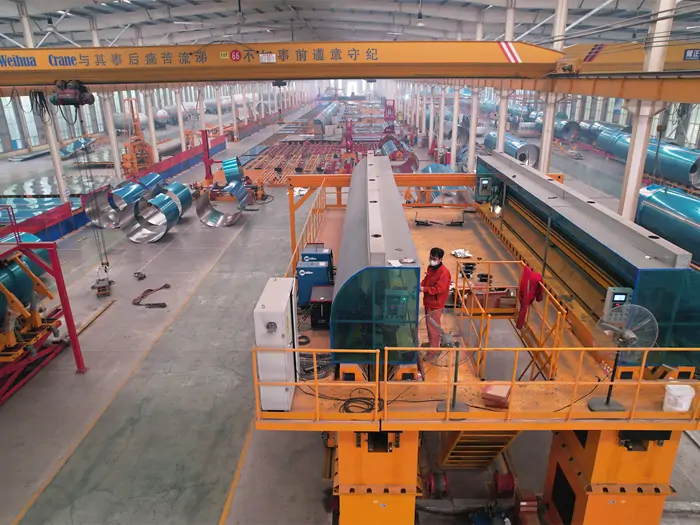
Welding quality determines whether the tanker will leak in service. INTAI applies automated submerged-arc welding and CO₂ gas-shielded robotic welding for tank seams, shell-head ring joints and internal baffle connections, instead of relying purely on manual welding.
Automatic welding delivers consistent penetration and uniform seams. After welding, weld seams go through visual inspection plus non-destructive testing (NDT): ultrasonic testing and X-ray flaw detection to eliminate hidden crack defects. Any defective weld must be reworked.
Once the tank body welding passes inspection, we install all functional and safety components:
All valve sets can be configured to satisfy destination-country regulations for easier customs clearance and local road legalization.
This is one of the most critical quality-control steps at INTAI. Every fuel tanker trailer must pass hydrostatic pressure test and air tightness test.
Surface treatment guarantees anti-corrosion performance, especially for coastal, high-humidity or desert working environments.
High-grade paint coating slows corrosion and significantly lengthens trailer service life.
The finished tank body is lifted and firmly mounted onto the heavy-duty main chassis. Our technicians assemble:
INTAI selects world-renowned branded core components to lower your later maintenance cost and extend service life.
Finished trailers go through comprehensive final checking by INTAI’s dedicated QC team:
Only units passing all checks receive factory release approval.
Before loading for export:
Trailers are shipped via bulk carrier or ro-ro vessel to global ports. INTAI welcomes customers to arrange on-site factory inspection before shipment.
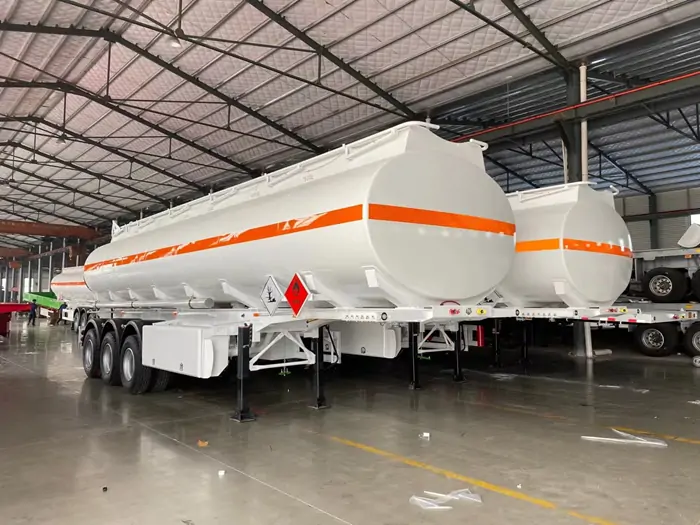
If you are sourcing durable fuel tanker semi-trailers, contact INTAI Trailer (Kevin) for your custom solution and free quotation.
Q1: What materials can INTAI use for fuel tanker tanks?
A: Carbon steel, stainless steel and aluminum alloy, selected according to your cargo, local road rules and budget.
Q2: Can you produce ADR–compliant fuel tanker trailers?
A: Yes. We configure valves, safety devices and marking as per ADR requirements for dangerous-goods transport.
Q3: What is your typical production lead–time?
A: Normally 25-35 working days, subject to order quantity and customized specifications.
INTAI Trailer has completed the production and shipment preparation of a 35CBM Tipper Semi Trailer for a customer in Uganda.
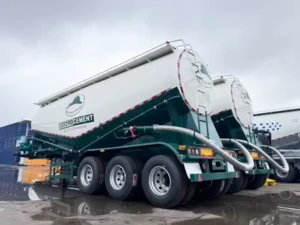
INTAI Trailer has successfully completed the production and delivery of 3 Axle Cement Bulker Trailers, which is prepared for shipment
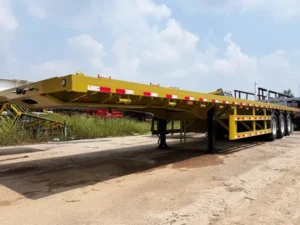
INTAI Trailer recently completed the production and delivery of 3 Axle Flatbed Semi Trailers Shipped To Rwanda, providing a reliable transportation