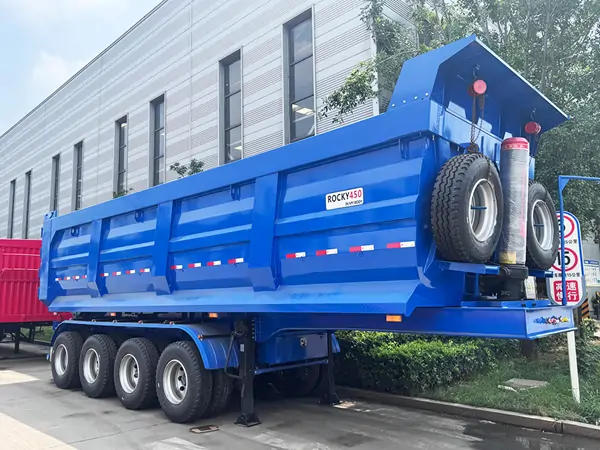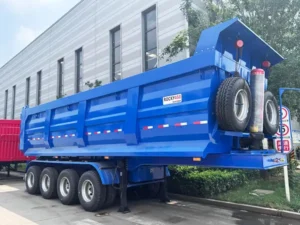
35CBM Tipper Semi Trailer Shipped To Uganda
INTAI Trailer has completed the production and shipment preparation of a 35CBM Tipper Semi Trailer for a customer in Uganda.


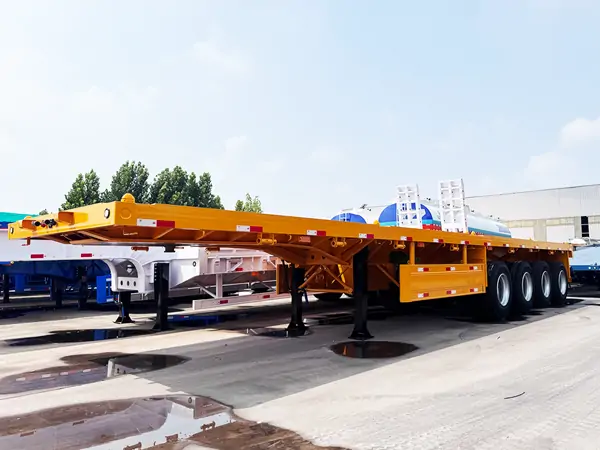
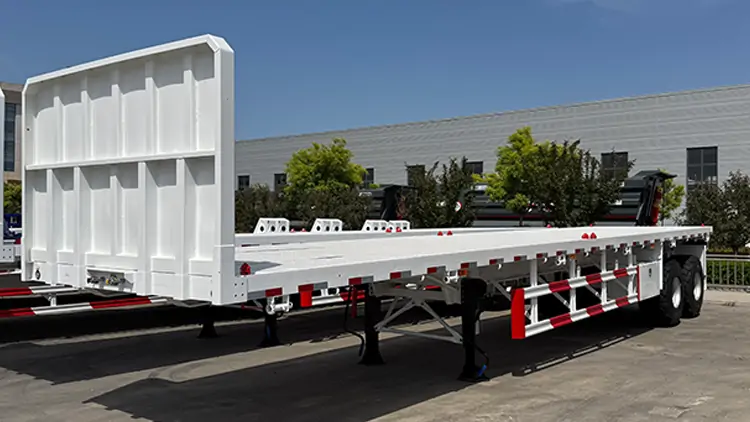
Choosing a good flatbed trailer that suits your needs is crucial, not only for its lifespan but also for transportation safety. A truly high-quality flatbed trailer will save you a lot of money on repairs and maintenance.This article will discuss how to choose a suitable flatbed trailer, focusing on aspects such as materials used, welding, components, and design philosophy.
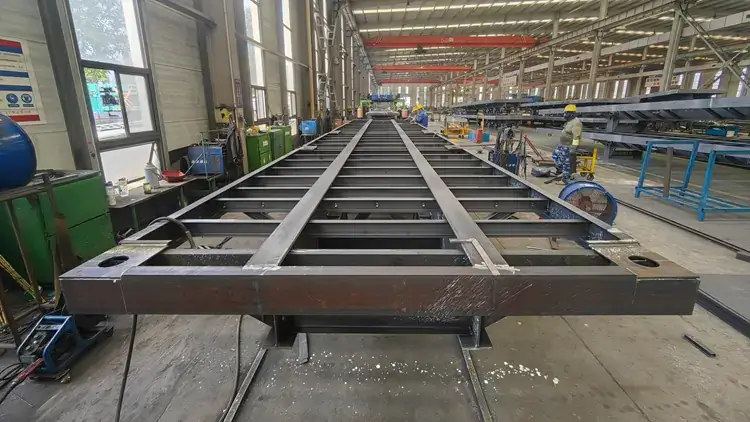
Step 1: Examine the Flatbed Trailer’s Chassis Main Beam: The main beam usually utilizes fully automatic submerged arc welding technology. This results in stronger welds, increased compressive strength, and reduced risk of cracking.
Step 2: Choose reputable parts brands. As the most frequently used component during operation, axles should be from world-renowned brands such as FUWA, BPW, and SAF. These brands not only have strong load-bearing capacity but also more stable braking performance. Most importantly, parts are readily available globally. Quality is guaranteed, and after-sales service is provided, avoiding maintenance hassles.
Step 3: Select a flatbed trailer of appropriate size based on your transportation needs. The most common use for flatbed trailers is transporting containers. Therefore, you need to determine the size of the containers you want to transport. If transporting 40-foot or 20-foot containers, only 4 container locks are needed. If the container size is uncertain, you will need to configure 12 container locks to flexibly switch between loading 1x40ft or 2x20ft containers.
Step 4: 1. Check the painting process of the flatbed trailer. Powder coating is a good choice. We do not recommend choosing semi-trailers that have been directly painted, as the former has three times the rust resistance and is more scratch-resistant.
2. Next, confirm whether the flatbed trailer has undergone shot blasting before painting to thoroughly remove the oxide layer and dust from the steel surface. This treatment results in stronger paint adhesion and less likelihood of peeling.
Final step: Confirm the weight of the flatbed trailer to comply with national road regulations.
INTAI Trailer has completed the production and shipment preparation of a 35CBM Tipper Semi Trailer for a customer in Uganda.
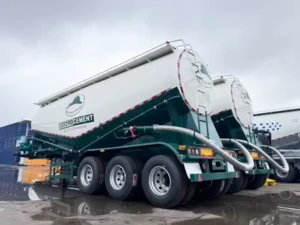
INTAI Trailer has successfully completed the production and delivery of 3 Axle Cement Bulker Trailers, which is prepared for shipment
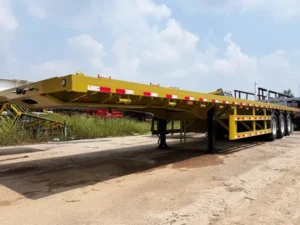
INTAI Trailer recently completed the production and delivery of 3 Axle Flatbed Semi Trailers Shipped To Rwanda, providing a reliable transportation