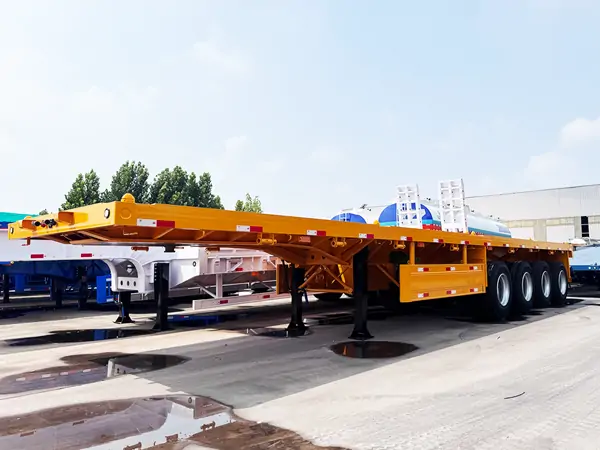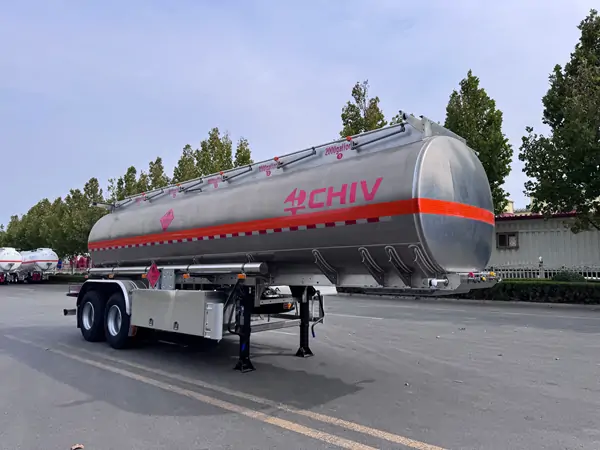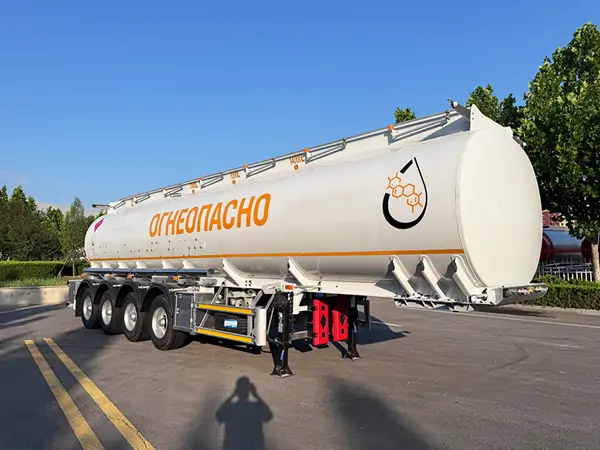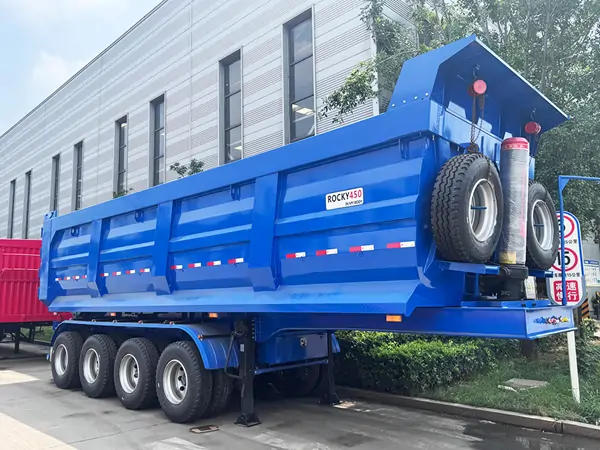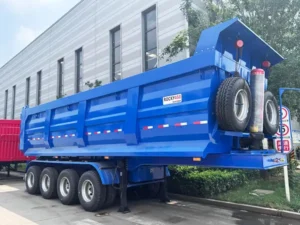
35CBM Tipper Semi Trailer Shipped To Uganda
INTAI Trailer has completed the production and shipment preparation of a 35CBM Tipper Semi Trailer for a customer in Uganda.


Operating and discharging a bulk cement trailer safely and efficiently is an essential skill for drivers, construction logistics teams, and site supervisors. This guide provides a step-by-step overview of how to discharge and operate a bulk cement trailer, which is specifically designed to transport and unload fine powdered materials such as cement, fly ash, lime, and mineral powder with minimal dust and waste. By combining INTAI Trailer’s advanced structural design with industry-standard safety practices, this manual serves as a reliable reference for fleet managers and terminal operators seeking standardized operational procedures.
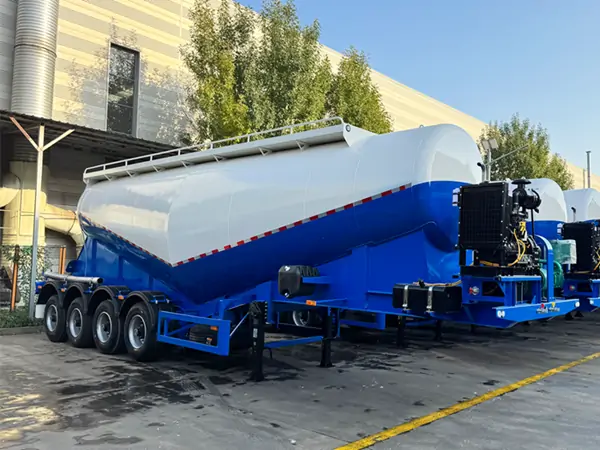
Before starting any Discharge and Operate a Bulk Cement Trailer, always perform a full pre-operation inspection. Park the trailer on a level, stable surface, engage the parking brake, and place wheel chocks to prevent movement.
Check the air compressor, pressure gauge, safety valve, discharge hoses, butterfly valves, and tank body for damage or leaks. Ensure no residual pressure remains in the tank and all valves are closed. Operators must wear proper personal protective equipment (PPE) including safety goggles, dust masks, gloves, and workwear to avoid exposure to cement dust.
INTAI Technical Advantage: Optimized V-Shaped Tank Design
Traditional tank trailers often suffer from high residual material rates due to structural blind spots. INTAI Trailer addresses this by employing a premium V-shaped tank design with an scientifically calculated fluidization slope. The single or double V-shape ensures that all fluidized cement powder flows directly and accelerated toward the bottom central discharge valve, reducing the material residual rate to an industry-leading less than 0.3%.
Step 1: Secure the Delivery Hose. Connect the heavy-duty unloading hose securely between the trailer’s bottom discharge port and the storage silo inlet. Make sure all quick-couplings are locked tight to prevent air or material leakage under high pressure.
Step 2: Engage the Bohai Air Compressor. Start the auxiliary diesel engine or engage the tractor’s Power Take-Off (PTO) to drive the built-in Bohai air compressor. Known for its extreme durability and high volumetric efficiency in heavy machinery, the Bohai compressor delivers a continuous, oil-free high-volume airflow that fluidizes the cement inside the V-shaped chamber perfectly.
Step 3: Gradual Pressurization. Allow the system to build stable air pressure gradually. Monitor the pressure gauge constantly. The air must penetrate the fluidizing bed canvas until the interior pressure reaches the recommended operating range, typically between 0.15 MPa and 0.2 MPa.
Once the correct operating pressure is achieved, slowly open the main discharge butterfly valve to begin the pneumatic material flow into the silo.
Monitor the pressure gauge constantly during unloading. If pressure rises too high (approaching 0.22 MPa) or material flow stops, close the discharge valve immediately to check for pipeline blockages or use the auxiliary air blow-by valve to clear the line. Maintain steady pressure for smooth and efficient discharge. For multi-compartment V-shaped trailers, always unload one section or compartment at a time to avoid uneven weight distribution and clogging.
| Operational Indicator | Standard Metric | Critical Action / Status |
| Optimal Working Pressure | 0.15 MPa – 0.20 MPa | Normal discharging phase. Maintain engine/compressor RPM. |
| High Pressure Limit | > 0.22 MPa | Potential pipe blockage. Close discharge valve immediately! |
| Material Residual Rate | < 0.3% | Fully achieved via INTAI’s specialized V-shaped bed layout. |
When the discharge is nearly complete, the V-shaped tank pressure will drop naturally. Use the auxiliary air valves (blow-by valves) to blow through the piping and clear any remaining material trapped inside the tank bottom and delivery hoses.
After full unloading, turn off the Bohai air compressor and slowly open the pressure relief exhaust valve to release all remaining residual air inside the tank shell.
CRITICAL SAFETY WARNING: Never attempt to loosen couplings or disconnect delivery hoses while the tank body is still pressurized. Doing so can cause catastrophic injury. Ensure the pressure gauge reads absolute 0 MPa before disconnecting any parts.
Once fully depressurized, disconnect the hose, close all valves, clean the quick-connect couplings, and prepare the trailer for transport.
Following safe operating procedures extends the service life of the bulk cement trailer, reduces fleet maintenance costs, and prevents severe workplace accidents. Regular maintenance of the high-performance Bohai compressor, timely inspections of the internal fluidized bed canvas, and lubricating the butterfly valves ensure consistent, reliable delivery performance. Always follow manufacturer guidelines and local logistics safety regulations when operating pneumatic bulk cement trailers.
INTAI Trailer has completed the production and shipment preparation of a 35CBM Tipper Semi Trailer for a customer in Uganda.
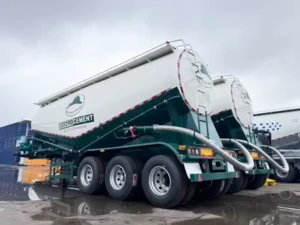
INTAI Trailer has successfully completed the production and delivery of 3 Axle Cement Bulker Trailers, which is prepared for shipment
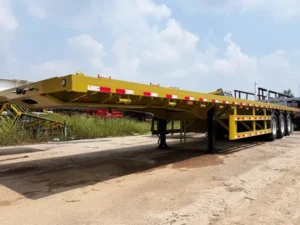
INTAI Trailer recently completed the production and delivery of 3 Axle Flatbed Semi Trailers Shipped To Rwanda, providing a reliable transportation