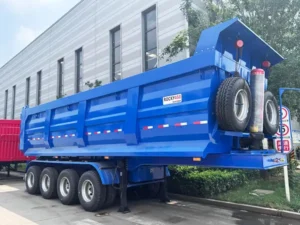
35CBM Tipper Semi Trailer Shipped To Uganda
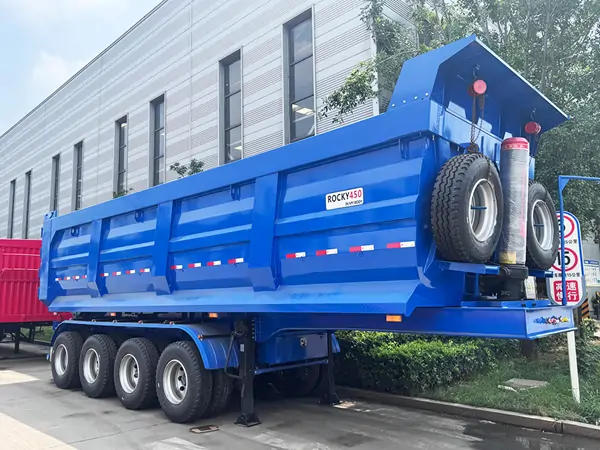
INTAI Trailer has completed the production and shipment preparation of a 35CBM Tipper Semi Trailer for a customer in Uganda.


Containerized shipping dominates global intermodal logistics, cross-border freight, port depot distribution, and inland container haulage worldwide. Choosing the right Container Transport Trailer is essential for efficient ISO container transportation, with skeleton trailers (skeletal container chassis) and flatbed trailers being the two most widely used solutions for fleet owners, logistics companies, and freight forwarders.
Both trailers can carry standard 20ft, 40ft and 45ft shipping containers, but they differ hugely in structural design, empty weight, fuel consumption, cargo flexibility, maintenance cost and cross-border customs adaptability. For cross-border routes covering China-Central Asia, EU, Middle East and Africa, choosing the right trailer directly cuts fuel costs, reduces customs inspection risks and improves fleet turnover efficiency.
This guide makes a full comparison between skeleton trailer and flatbed trailer focused purely on container transportation, helping you make a cost-effective purchasing decision.
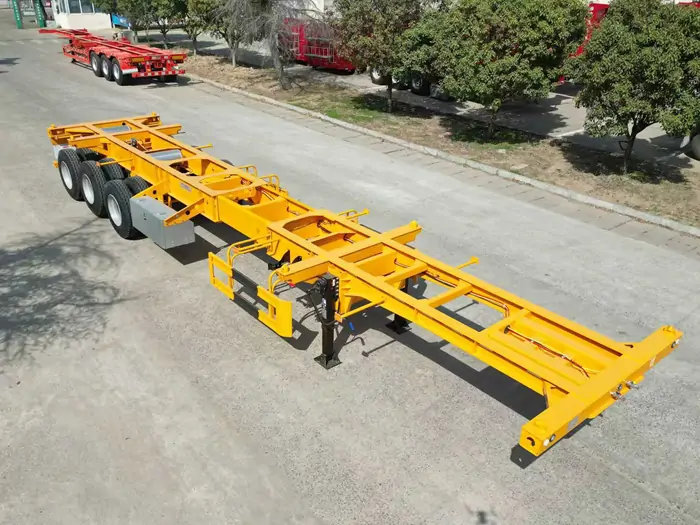
Also named skeletal trailer or container chassis, a skeleton trailer is a lightweight open steel frame semi-trailer designed exclusively for ISO standard container transport. It has no full solid cargo deck, only reinforced main beams, cross beams and fixed movable twist locks for container positioning.
Port-to-yard container haulage, dedicated container line transport, one-way container freight, cross-border container routes (China-Kyrgyzstan, China-Kazakhstan, EU inland container delivery).
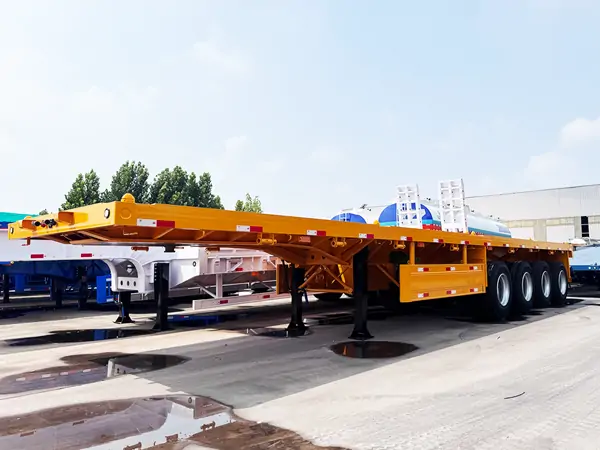
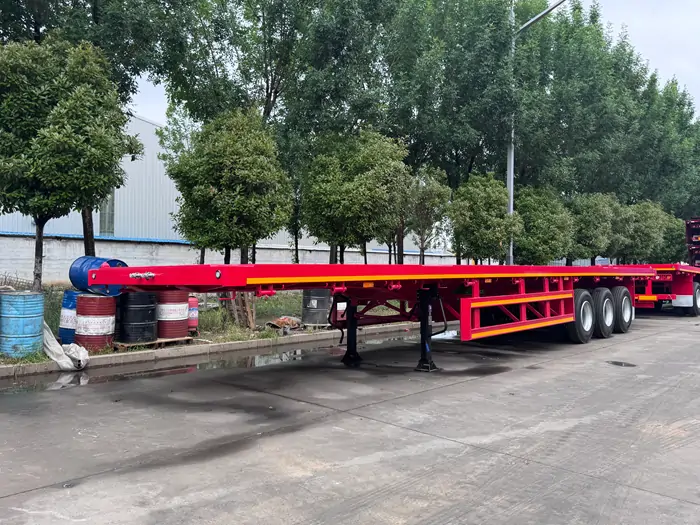
A flatbed trailer is a universal full-deck semi-trailer with an integrated solid steel platform deck. It is a multi-functional trailer that can carry ISO containers, bulk cargo, steel coils, construction materials, machinery and oversized freight without container packaging.
Users can install removable twist locks on the flatbed deck to lock shipping containers for safe container transportation.
Mixed cargo logistics, round-trip mixed freight, inland general haulage, engineering machinery transport, flexible container delivery with return bulk cargo loads.
| Comparison Item | Skeleton Trailer | Flatbed Trailer |
| Structural Design | Hollow frame, no full deck | Solid full steel platform deck |
| Cargo Flexibility | Only for standard ISO containers | Container + bulk goods + machinery multi-use |
| Container Loading Speed | Fast, fixed twist locks, direct container positioning | Slow, need to adjust movable twist locks manually |
| Maintenance Cost | Low, less wearing parts, easy daily repair | High, deck abrasion, welding repair needed frequently |
| Procurement Price | Lower factory price | Higher cost for full deck production |
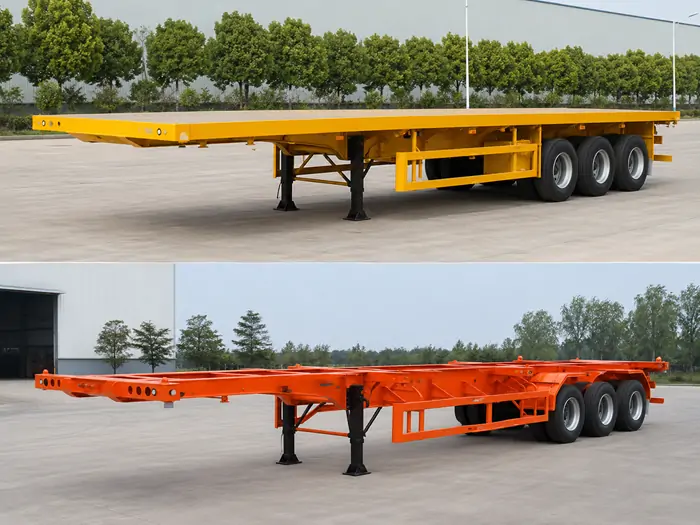
There is no absolute better trailer, only the more suitable one for your logistics business. The skeleton trailer is the cost-efficient professional choice for pure container cross-border and port logistics, while the flatbed trailer is the versatile profit-maximizing option for mixed cargo fleets.
If you need customized 20ft/40ft skeleton trailer or flatbed trailer with EU braking configuration, kingpin size drawing and factory quotation, contact our professional trailer team for tailored solutions for global border container transport Trailer.
INTAI Trailer has completed the production and shipment preparation of a 35CBM Tipper Semi Trailer for a customer in Uganda.
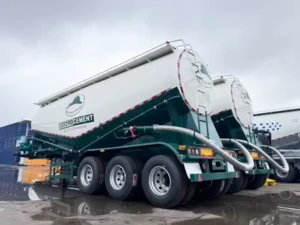
INTAI Trailer has successfully completed the production and delivery of 3 Axle Cement Bulker Trailers, which is prepared for shipment
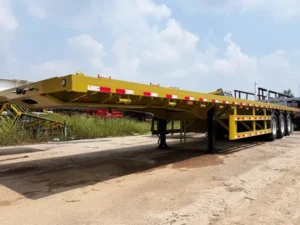
INTAI Trailer recently completed the production and delivery of 3 Axle Flatbed Semi Trailers Shipped To Rwanda, providing a reliable transportation