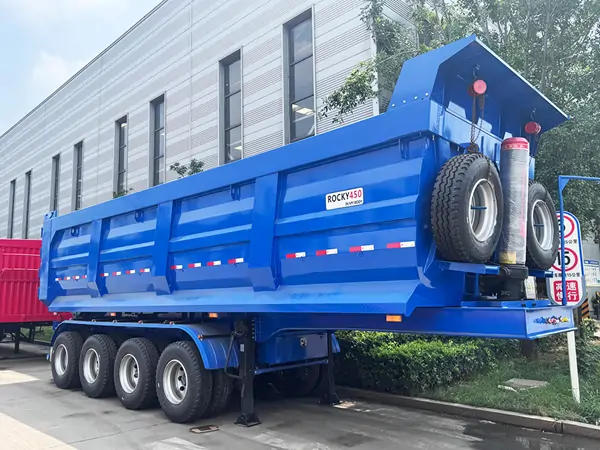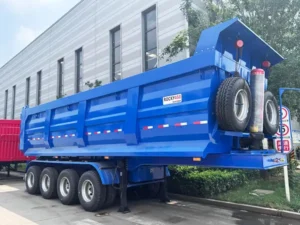
35CBM Tipper Semi Trailer Shipped To Uganda
INTAI Trailer has completed the production and shipment preparation of a 35CBM Tipper Semi Trailer for a customer in Uganda.


How to choose an oil tanker semi-trailer? The Ultimate Buying Guide for 2025 (with Key Takeaways)
Description: Are you struggling to purchase or upgrade your fleet of fuel tanker trailers? This guide provides a detailed analysis of how to scientifically select a safe, efficient, and compliant fuel tanker trailer from eight core dimensions, including transportation medium, regulations, structure, and materials, to help you reduce operating costs and improve transportation efficiency.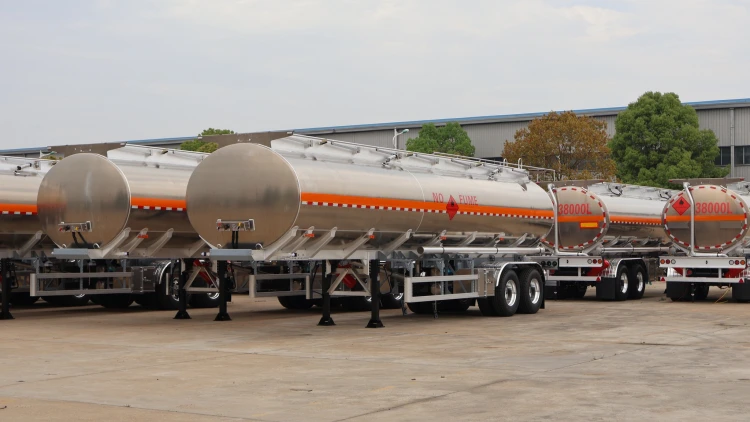
Step 1: Determine the transport medium – this is the foundation for all choices. Different types of oil have vastly different requirements for tanks.
Light Oil Products (e.g., gasoline, diesel): These media are volatile, flammable, and explosive. Typically,
Pressure requirements: Equipped with a breather valve and flame arrester; the tank must have a certain pressure-bearing capacity (atmospheric or low pressure).
Internal structure: Baffles are often used to reduce the impact of liquids during transportation.
Heavy oil products (such as crude oil and heavy oil): have high viscosity and may solidify at low temperatures.
Insulation and Heating: Insulated or heated tank trucks (e.g., jacketed heating or coil heating) must be selected to ensure smooth flow of the oil during unloading.
Chemical liquids (such as methanol and acetic acid): are corrosive.
Material selection: Stainless steel (such as 304, 316L) or other corrosion-resistant materials must be used for the tank body. Carbon steel tank bodies are absolutely unsuitable here.
Summary: The transported medium determines the tank’s material, structure, pressure rating, and auxiliary systems. This is the first and most crucial step in the selection process.
Step 2: Adhere to Regulations and Certifications – Compliance is the Lifeline of Operations. Understand local road regulations in advance, and confirm whether there are requirements for the weight and size of the vehicle. Some countries usually have weight restrictions.
Step 3: Analyzing Core Configurations – Building Your Custom-Made High-Efficiency Tank Truck
Carbon Steel: Economical and practical, suitable for non-corrosive materials such as diesel and water. It is the preferred choice for transporting most general cargo oil products.
Stainless Steel: Corrosion-resistant, easy to clean, suitable for chemical media and food-grade oils (such as edible oil). Higher initial investment, but longer lifespan and lower maintenance costs.
Volume: Commonly ranging from 35 cubic meters to 45 cubic meters. it’s necessary to comprehensively consider regulatory limits on total mass, road conditions of frequently used routes, and restrictions on loading and unloading locations.
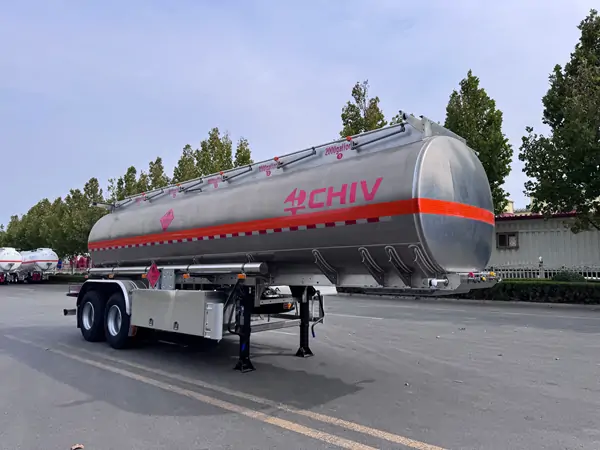
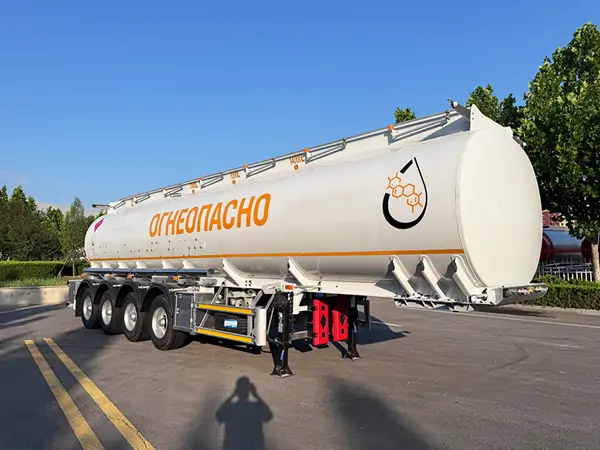
Oval/Circular Tank: Low center of gravity, good driving stability, and is the mainstream in the market.
Square-Round Tank: Larger effective volume, but relatively higher center of gravity, requiring higher standards for the frame and sub-beams.
Internal Baffles: Their number and layout directly affect driving stability. The design of the holes in the baffles also affects loading and unloading efficiency and ease of cleaning.
Emergency Shut-off Device: An essential safety device that can immediately stop liquid leakage in the event of a tanker truck overturning or a pipeline rupture.
Static Grounding System: Promptly dissipates static charge generated during loading, unloading, and driving, preventing static fires.
Breather valve: Regulates the pressure balance inside and outside the tank, reduces media evaporation, and ensures safety.
Flame arrestor: Prevents external ignition sources from entering the tank.
Gravity Unloading: Relying on gravity, this method has a simple structure, low cost, and is suitable for scenarios with height differences.
Powered unloading (pump): Uses centrifugal pumps or gear pumps, offering fast unloading speeds and is not limited by terrain. The appropriate pump type must be selected based on the oil viscosity.
Pressure unloading (compressed air): Suitable for specific enclosed unloading applications.
Step 3: Consider the chassis and suspension. Axles and suspension: Choose axles from well-known brands (such as Guangdong Fuhua, BPW) and air suspension or mechanical suspension. Air suspension provides better protection for the tank and road surface, resulting in smoother transport.
Tires: Choose high-quality tubeless radial tires and provide a reliable spare tire option.
ABS anti-lock braking system: greatly improves directional stability and safety during braking.
Step 4: Choosing a Reliable Manufacturer – Guarantee of Quality and Service
First, consider whether the company is a factory and whether it has many years of R&D experience. When purchasing tanker trailers, always cooperate with a factory, not a trading company. Trading companies cannot control product quality and production time.
Complete qualifications: Possesses legal production qualifications and complete quality system certifications.
Exquisite craftsmanship: Examine its welding process and anti-corrosion treatment (such as sandblasting and rust removal, multi-layer spraying).
INTAI Trailer has completed the production and shipment preparation of a 35CBM Tipper Semi Trailer for a customer in Uganda.
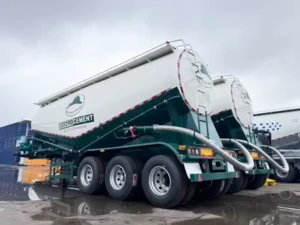
INTAI Trailer has successfully completed the production and delivery of 3 Axle Cement Bulker Trailers, which is prepared for shipment
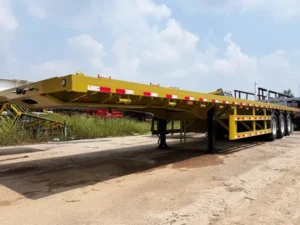
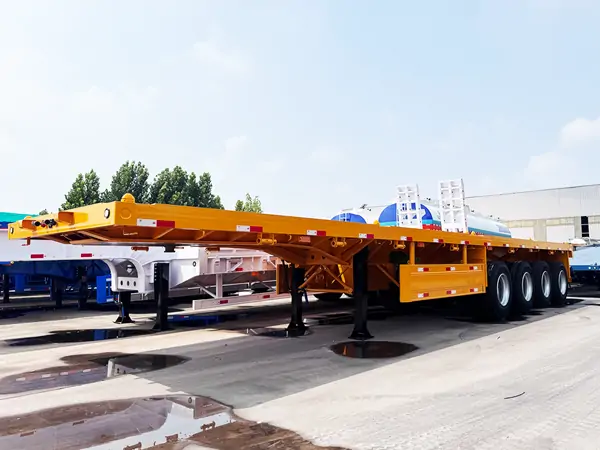
INTAI Trailer recently completed the production and delivery of 3 Axle Flatbed Semi Trailers Shipped To Rwanda, providing a reliable transportation