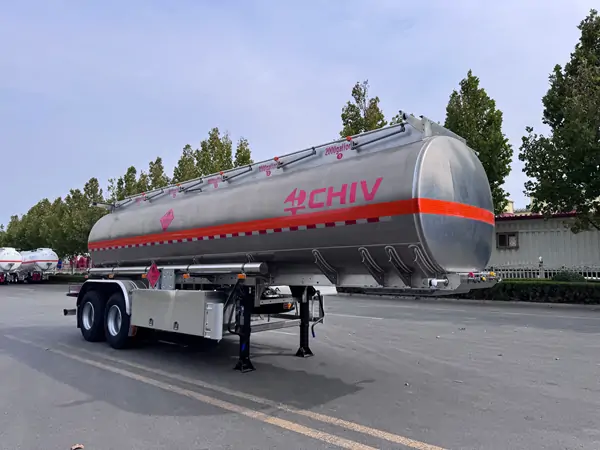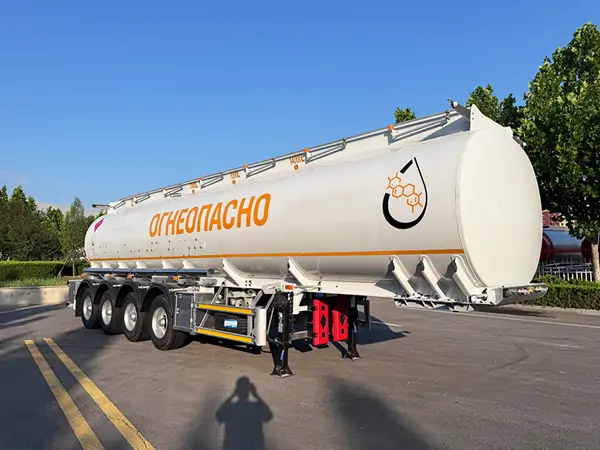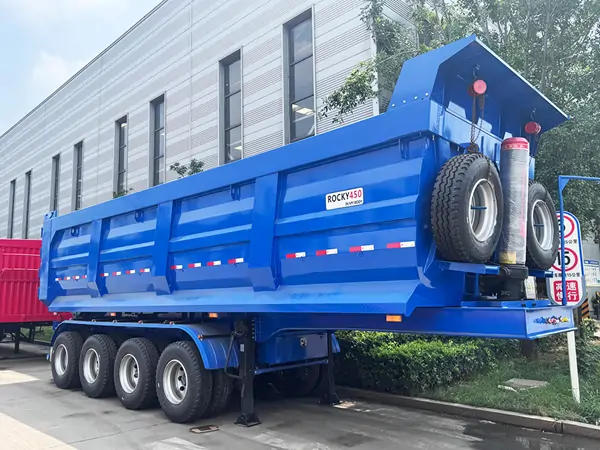
Both LPG tank trailer and LNG tank trailer are gas transport semi-trailers in the energy transportation field, but the physical properties of the gases they transport are completely different. Their requirements for transport temperature and pressure determine that LNG trailers and LPG trailers have fundamental differences in design principles and construction.
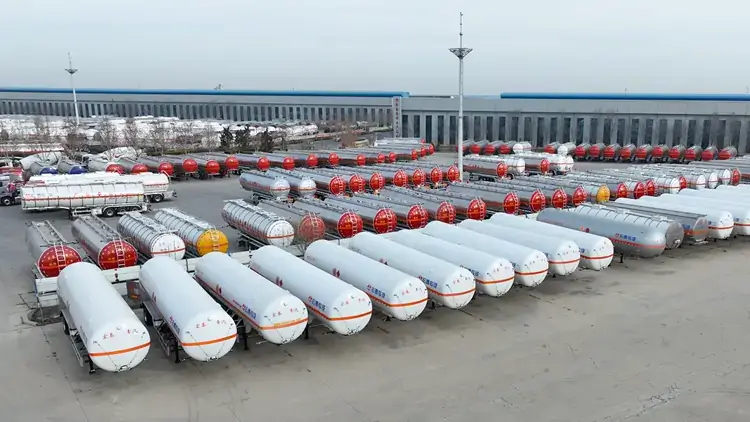
Here is a comparison of the core differences between the two:
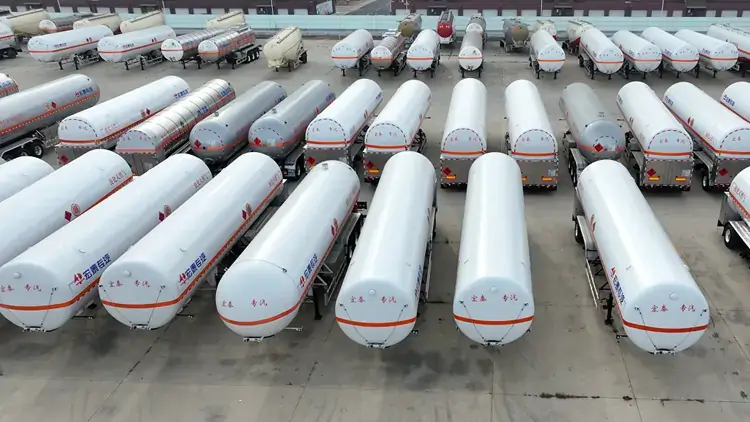
1.LPG Tank and LNG Tank Transportation Media
- LPG tank trailers are primarily used to transport liquefied petroleum gas (LPG), propane, butane, propylene, liquid ammonia, methylamine, etc. These gases are liquefied at room temperature under high pressure (approximately 0.8-1.5 MPa). Therefore, an LPG tank trailer is essentially a high-pressure container.
- LNG tank trailers are cryogenic pressure vessel transport vehicles, mainly used to transport gases such as liquefied natural gas, liquid nitrogen, liquid oxygen, liquid argon, and liquid ethylene. The principle of transporting these gases is through cryogenic liquefaction, so LNG tank trailers need a double-layer vacuum insulation structure to provide an ultra-low temperature environment for these gases to ensure that the gases remain in a liquid state.
2.Differences In Tank Structure And Materials
| Characteristics | LPG Tank | LNG Tank |
| Tank body layer structure | Single-layer tank | Double-layer vacuum structure (inner tank + outer tank) |
| Tank material | Q345R or WH590E | Low-temperature resistant steel |
| Insulation method | No insulation | The interlayer is vacuum insulated to prevent external heat from entering |
| Design pressure | Higher (approximately 1.6 – 2.2 MPa) | Lower (approximately 0.6 – 1.2 MPa), mainly relying on temperature control. |
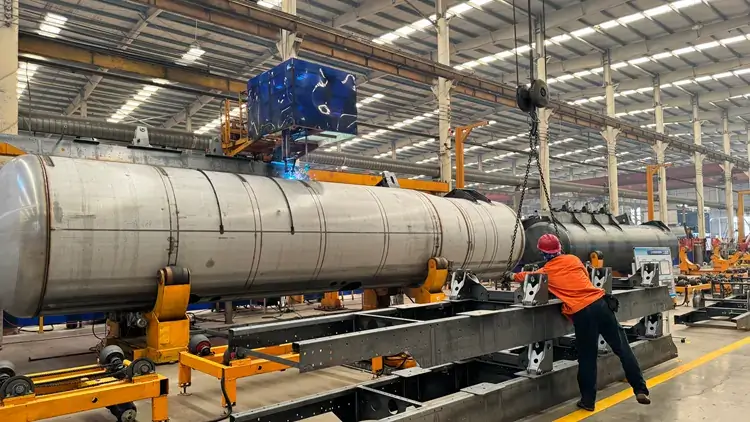
3. Loading and Unloading Methods
- LPG tank trailer unloading: Usually relies on hydraulic pumps or compressors for loading and unloading. The system is relatively simple, but the pressure resistance requirements for the seals are extremely high.
- LNG tank trailer unloading: Utilizes a booster (generating pressure through its own vaporization) to force the liquid out. Because it is a cryogenic medium, all valves and pipelines must be equipped with anti-cold embrittlement function.
4.Technical Advantages of LNG Tank Trailers
- Extremely low evaporation rate: LNG tank trailers feature high-performance vacuum insulation layers, reducing evaporation loss of the liquefied gas during transportation due to external heat penetration.
- Cryogenic-resistant materials: The LNG tank interior, valves, and pipelines are all made of cryogenic-resistant stainless steel, ensuring high strength even at -196°C.
- LNG tank safety design: Equipped with multi-stage safety valves, emergency shut-off devices, and vacuum monitoring instruments to ensure stable pressure inside the tank in real time.
5.LNG and LPG Tank Trailer Purchase Guidelines
- If you are transporting media that require high-pressure liquefaction, such as propane, butane, liquid ammonia, or dimethyl ether, please choose an LPG tank.
- If you are transporting natural gas (methane), or cryogenic liquids such as liquid nitrogen, liquid oxygen, or liquid argon, these media must remain liquid at extremely low temperatures (below -162°C) and require an LNG tank trailer.