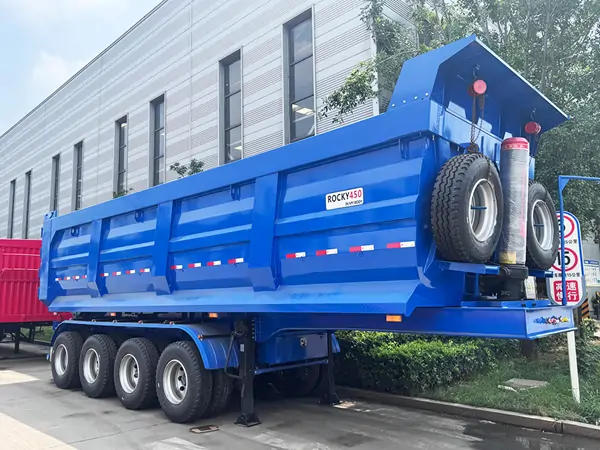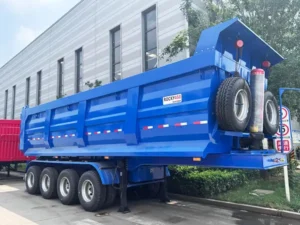
35CBM Tipper Semi Trailer Shipped To Uganda
INTAI Trailer has completed the production and shipment preparation of a 35CBM Tipper Semi Trailer for a customer in Uganda.


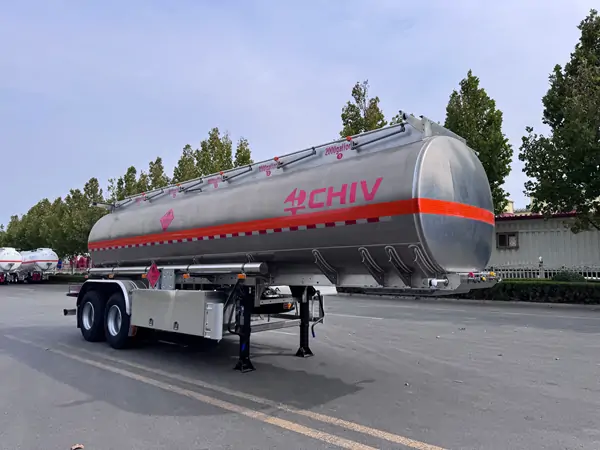
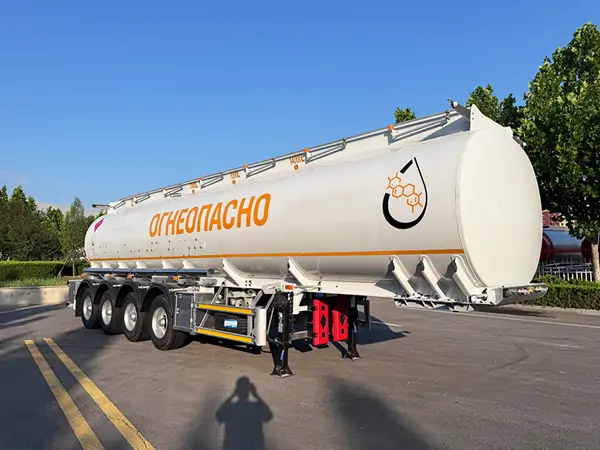
Fuel tanker trailers are an important component of modern energy transportation, making it crucial to understand their working principles. This article will provide an in-depth analysis of the working principles and structural components of tanker trailers, as well as how to select the right tanker trailer in 2026.
Fuel filling principle: Currently, bottom-loading of fuel tanks is gradually replacing top-loading. The tank is connected to the API connector, and a pneumatic control system opens the bottom valve, allowing fuel to flow in from the bottom. This reduces static electricity generated by liquid collisions. Once the fuel level reaches 95%, the top anti-overflow system sends a stop signal and shuts off the fuel pump. This is the entire fuel filling process.
Oil unloading principle: The oil unloading principle utilizes the height difference and gravity to transport the oil through the sea valve and discharge valve. For high-level storage tanks and equipment loading and unloading, pumps are usually used to provide power for forced discharge.
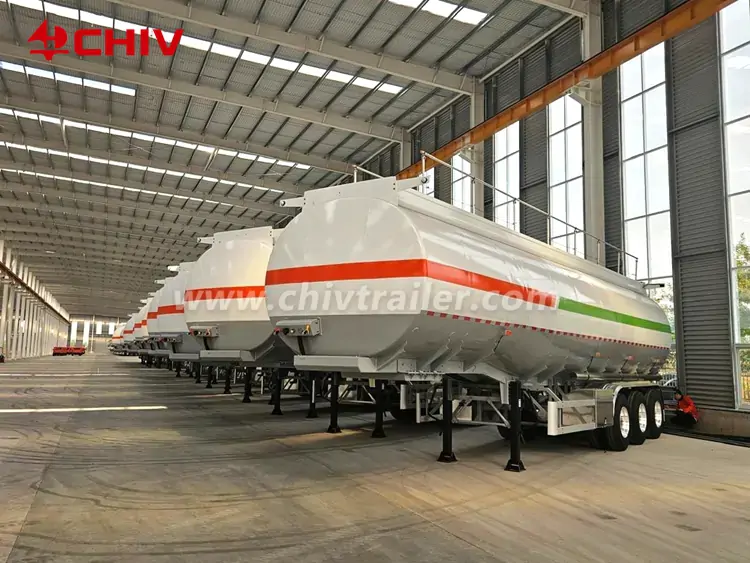
Why is the tank body designed in a circular shape?
Firstly, the tank body of an oil tanker trailer is typically designed in an elliptical or square-round shape. This design aims to lower the overall center of gravity and prevent the risk of tipping over during transport. The round shape of the tank body reduces the lateral impact of the fuel on the tank during transport, making the fuel transport process more stable and safer.
What are the differences and functions of anti-wave board and bulkheads on fuel tanker?
Difference: The difference between a wave deflector and a bulkhead is that a bulkhead is a sealed partition, while a anti-wave board has a circular hole.
Dividing panel function:The main function of bulkheads is to divide the tanker trailer into multiple compartments, allowing for the simultaneous transport of various fuels and preventing mixing of different fuels. The number of bulkheads depends primarily on the number of compartments the customer requires.
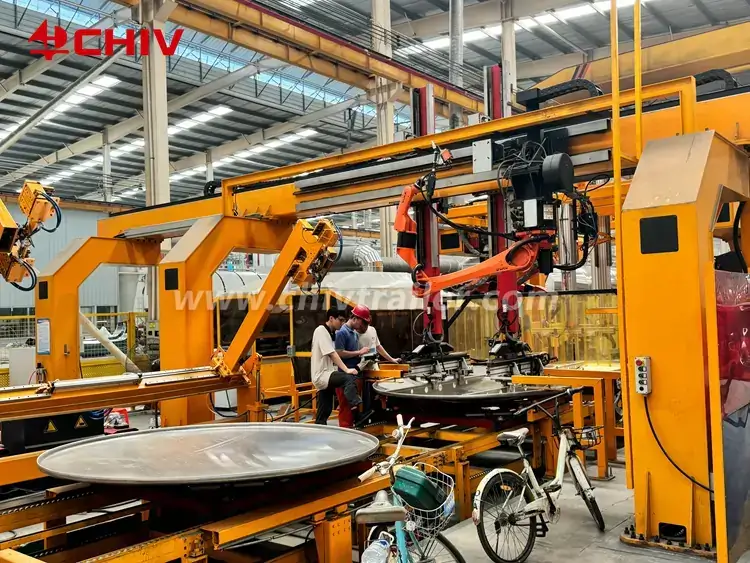
The function of anti-wave board: As the name suggests, wave deflectors are designed to prevent waves. In practice, wave deflectors on fuel tanks are used to reduce the amplitude of fuel waves during transportation. This design aims to reduce the impact of waves on the tank, improve safety, and also reduce static electricity generated by the impact between the fuel and the tank.
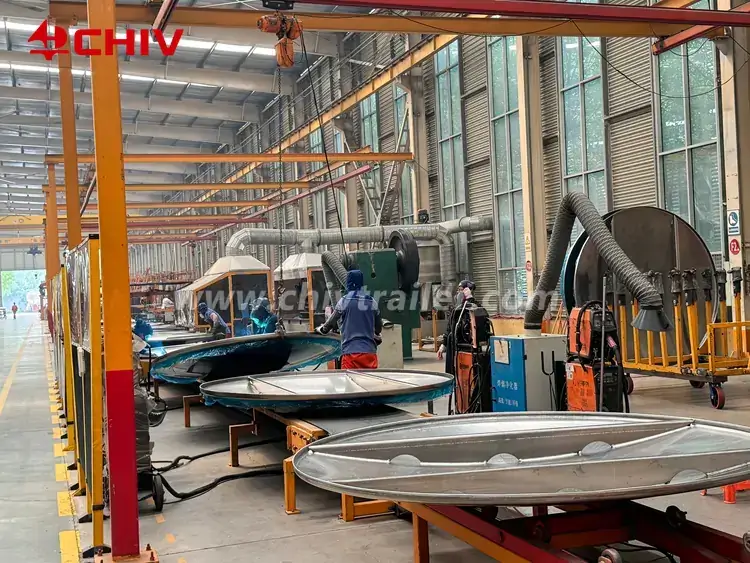
Fuel oil is a flammable and explosive hazardous material. Thorough preparation is essential before loading and unloading; no step can be overlooked, as even the slightest negligence can lead to catastrophic consequences.
Preparations before loading and unloading:
1.Static grounding (most important): You must first connect the special socket for anti-overflow static electricity detection.
2.Engine shutdown and power disconnection: Before loading and unloading oil, the tractor must be turned off, the handbrake engaged, and the main power switch turned off.
3.API Interface Connection: When connecting the API unloading valve to the oil loading arm, ensure that the cam locking handle is fully engaged.
Precautions during the oil filling process:
1.Monitor the overflow prevention probe: Closely observe the photoelectric probe signal on the control panel to prevent excessive oil filling and overflow.
2.Note the flow rate: When you first start filling the tank with oil, do not make the flow rate too fast to prevent it from impacting the tank and generating static electricity. Increase the flow rate only after the oil inlet is submerged.
Precautions during oil unloading:
1.Confirm oil type and storage location: Before unloading, the waybill, storage tank number, and tank label must be checked to avoid mixing or mis-unloading of oil.
2.Especially the recovery valve: the oil vapor recovery valve must be in the open position during oil unloading to prevent the tank from collapsing and deforming due to pressure reduction inside the tank.
China’s Advanced Oil Tank Trailer Production Line
INTAI Trailer has completed the production and shipment preparation of a 35CBM Tipper Semi Trailer for a customer in Uganda.
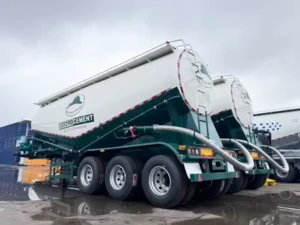
INTAI Trailer has successfully completed the production and delivery of 3 Axle Cement Bulker Trailers, which is prepared for shipment
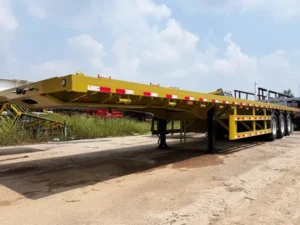
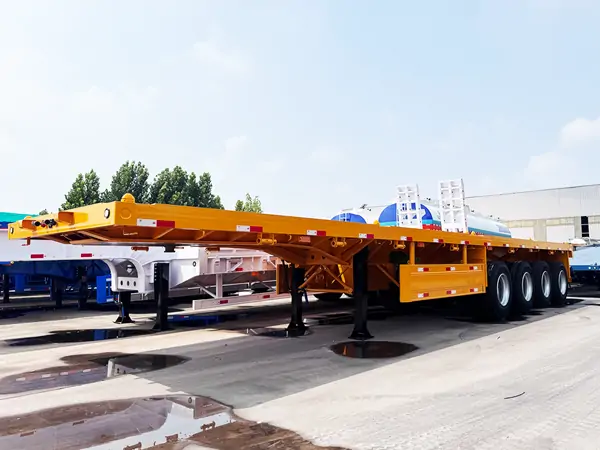
INTAI Trailer recently completed the production and delivery of 3 Axle Flatbed Semi Trailers Shipped To Rwanda, providing a reliable transportation