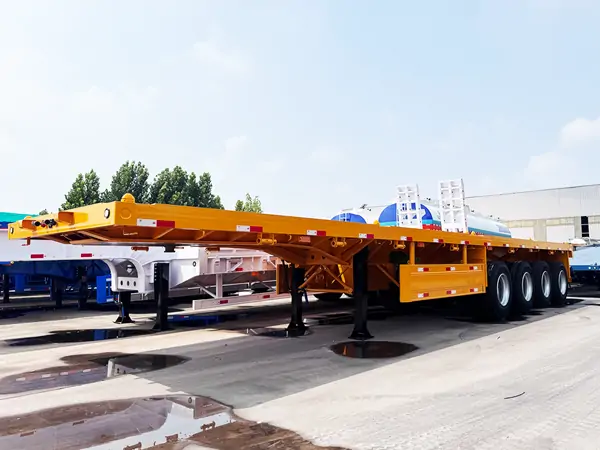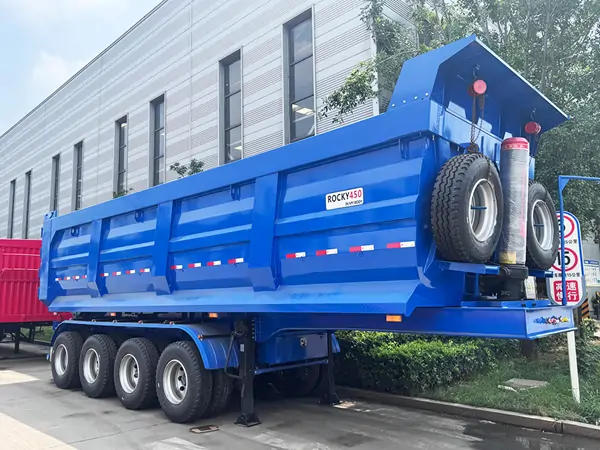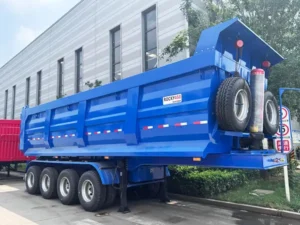
35CBM Tipper Semi Trailer Shipped To Uganda
INTAI Trailer has completed the production and shipment preparation of a 35CBM Tipper Semi Trailer for a customer in Uganda.


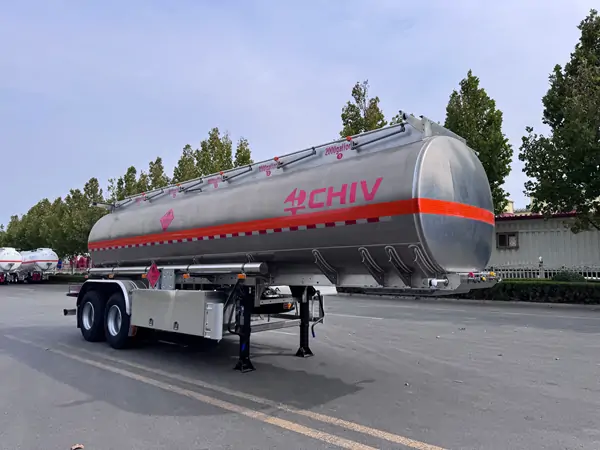
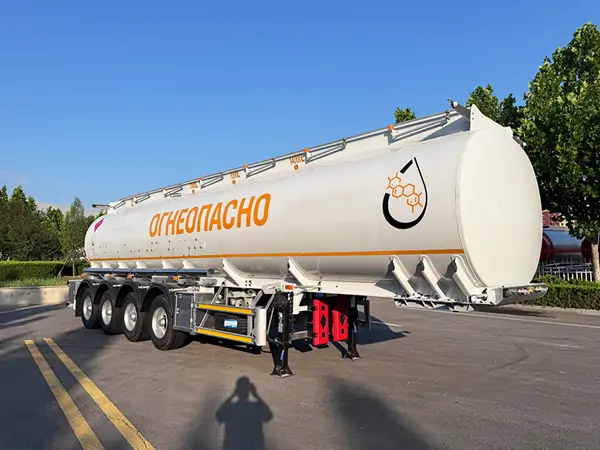
With the rapid growth of global energy transportation, LPG Tanker Trailers have become an essential solution for transporting liquefied petroleum gas across regions and countries. Due to the flammable and pressurized characteristics of LPG, any accident involving an LPG tanker trailer requires immediate and professional emergency handling procedures.
According to industry safety reports, LPG transportation accidents are relatively rare because modern LPG tank trailers, especially INTAI LPG tank trailers, are engineered with advanced safety systems, including emergency shut-off valves, pressure relief devices, anti-corrosion protection, and high-strength tank structures. With strict manufacturing standards and reliable safety designs, INTAI LPG tank trailers help reduce operational risks during LPG transportation. However, when accidents occur, incorrect handling can still increase risks such as gas leakage, fire, explosion, and environmental damage.
To improve transportation safety, drivers, operators, and emergency teams must understand the complete procedure for handling a LPG tanker trailer accident.
Scenario: The vehicle is involved in a collision, rear-end accident, or rollover. The outer shell of the tank remains intact, and there is no LPG leakage.
Risks:
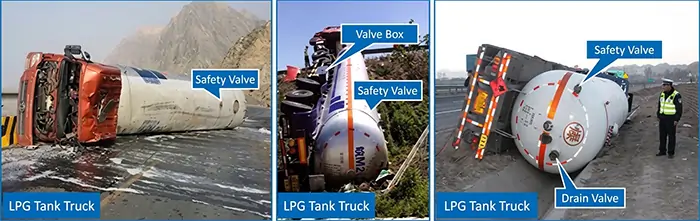
Scenario: A traffic accident damages valves, pipelines, or the tank body, causing vapor-phase leakage or liquid-phase spray leakage.
Risks:
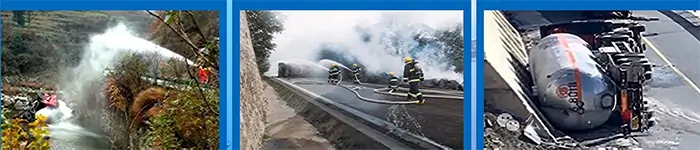
Scenario: The leaked LPG comes into contact with an ignition source and catches fire, or even causes a deflagration/explosion. Another possible cause is overheating caused by prolonged downhill braking or tire fires, resulting in continuous high-temperature heating of the tank.
Risks:
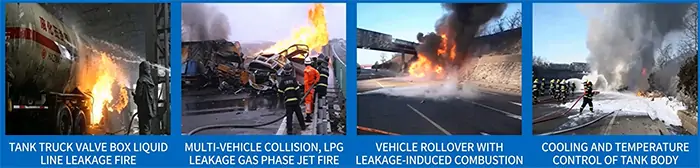
Applicable situations: Tank overheating, LPG leakage, fire incidents, or tire fires heating the tank.
Operation: Use a fog water spray system to completely cover the tank surface and continuously spray water to reduce tank temperature and internal pressure, preventing tank rupture caused by excessive heat.
Key precautions:
Applicable situations: Gas-phase or liquid-phase LPG leakage and large-scale gas diffusion.
Operation: Use fog water guns or water curtains to create a water mist barrier, continuously diluting LPG concentration in the air until it falls below the lower explosive limit.
Key precautions:
Applicable situations: Leakage caused by damaged valves or pipelines when the emergency shut-off system remains functional.
Operation: Close the hydraulic emergency shut-off valve to cut off the LPG supply route and stop further leakage.
Key precautions: If the hydraulic shut-off valve fails, use non-sparking tools under water mist protection and choose one of the following methods to release hydraulic pressure:
Applicable situations: Small pipeline leaks, valve packing leakage, or minor tank damage without large-scale spray leakage.
Operation: Use magnetic pressure sealing devices, steel band clamps, wooden wedges, inflatable sealing pads, and other professional tools to block the leakage.
Key precautions:
Applicable situations: Large-area tank damage, failed leak sealing, and no available tank transfer conditions.
Operation: Continuously cool the tank while using water mist dilution to allow the remaining LPG to naturally discharge safely.
Key precautions:
Applicable situations: The tank remains intact, leakage is controllable, and a safe empty tanker trailer and professional equipment are available.
Operation: Use pressure difference or explosion-proof pumps to transfer LPG from the damaged tanker into a safe empty tank.
Key precautions:
Applicable situations: Stable leakage, limited gas diffusion range, and no nearby dense population areas or buildings.
Operation: Connect a discharge pipe to guide LPG to an open and safe area, then ignite it under controlled conditions to consume the released gas.
Key precautions:
Applicable situations: The site does not allow LPG transfer or controlled venting, and the tank must be moved to a specialized facility for treatment.
Operation: Use professional lifting equipment to hoist the tank and transport it using a flatbed trailer.
Key precautions:
Responsible departments: Firefighting and traffic police work together to provide coordinated protection.
Operation procedure:
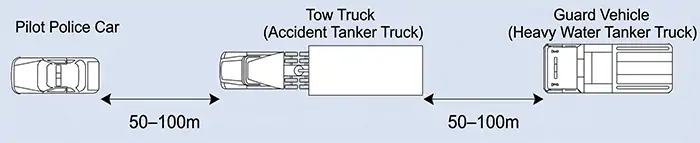
If an LPG tanker trailer is on fire, the leakage source must be controlled first. Extinguishing the flame without stopping the gas release may cause continuous gas accumulation and create an explosion hazard.
Uneven cooling may damage the tank structure, while direct water spraying on the safety valve of a liquid-filled tank may affect normal pressure relief operations.
Any impact sparks, static electricity, or electrical sparks may ignite LPG vapor and trigger a fire or explosion.
When LPG gas spreads over a wide area, intentional ignition is strictly prohibited because it may cause uncontrolled combustion or explosion.
Applying external force to a pressurized tank may damage the pressure vessel structure and increase accident risks.
Before transferring LPG from one tank to another, nitrogen inerting must be completed to reduce the risk of fire, explosion, and oxygen-related hazards.
A pressurized LPG tank must be safely depressurized and confirmed stable before any lifting or relocation operation is allowed.
Handling an LPG tanker trailer accident requires a strict and systematic emergency procedure. From immediate evacuation and leakage assessment to professional rescue operations and post-accident inspection, every step plays an important role in protecting people, equipment, and the environment.
Safety is always the top priority in LPG transportation. With proven manufacturing standards and continuous innovation, INTAI LPG tank trailers have become a trusted choice for global customers. Recent, clients from many countries visit INTAI’s factory to experience our production strength and order high-quality LPG tank trailer solutions.
Choose INTAI as your trusted LPG transportation partner for safer and more efficient gas transport solutions.
INTAI Trailer has completed the production and shipment preparation of a 35CBM Tipper Semi Trailer for a customer in Uganda.
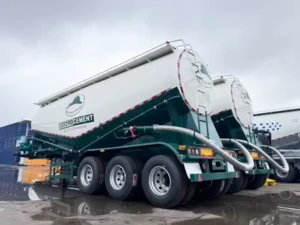
INTAI Trailer has successfully completed the production and delivery of 3 Axle Cement Bulker Trailers, which is prepared for shipment
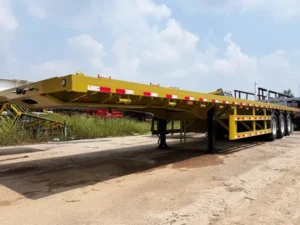
INTAI Trailer recently completed the production and delivery of 3 Axle Flatbed Semi Trailers Shipped To Rwanda, providing a reliable transportation