



Insulated oil tank trailers typically consist of a tank body, an insulation layer (rock wool or polyurethane), and an outer panel. Some models are also equipped with a heating system.
The insulated oil tank trailer can be customized with capacities of 30,000L, 40,000L, 45,000L and up to 60,000L.
Equipped with a 100mm thick high-density polyurethane foam layer, the internal oil temperature can drop by no more than 2-3°C within 24 hours. Suitable for long-distance, high-speed transportation of gasoline, diesel, or kerosene.
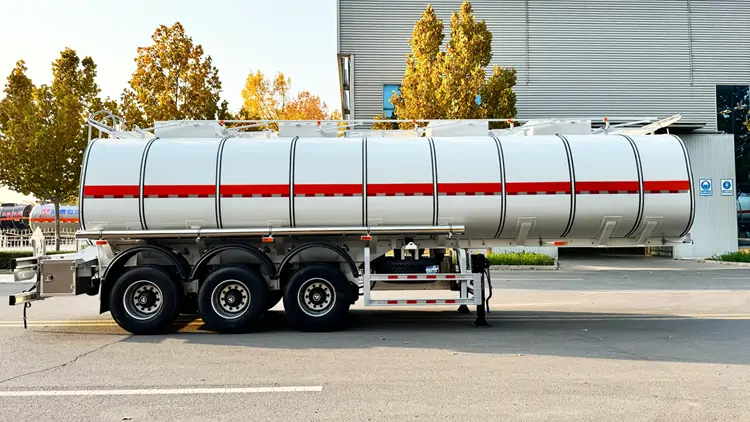
Insulated Oil Tank Trailer
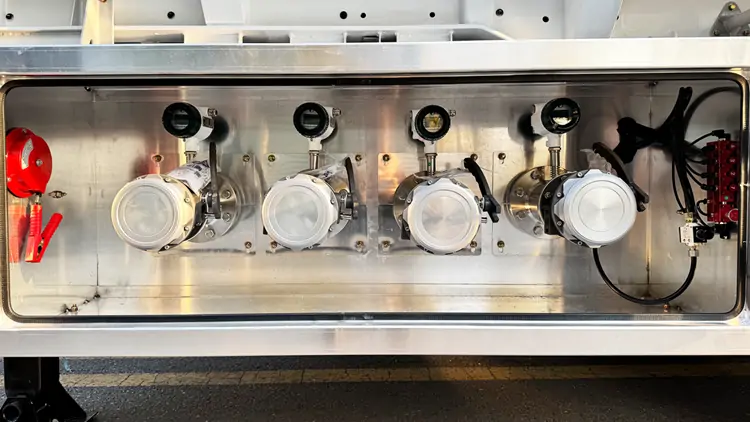
The oil tanker trailer is equipped with API discharge valves and flow meters, enabling more accurate calculation of the progress of fuel loading and unloading.
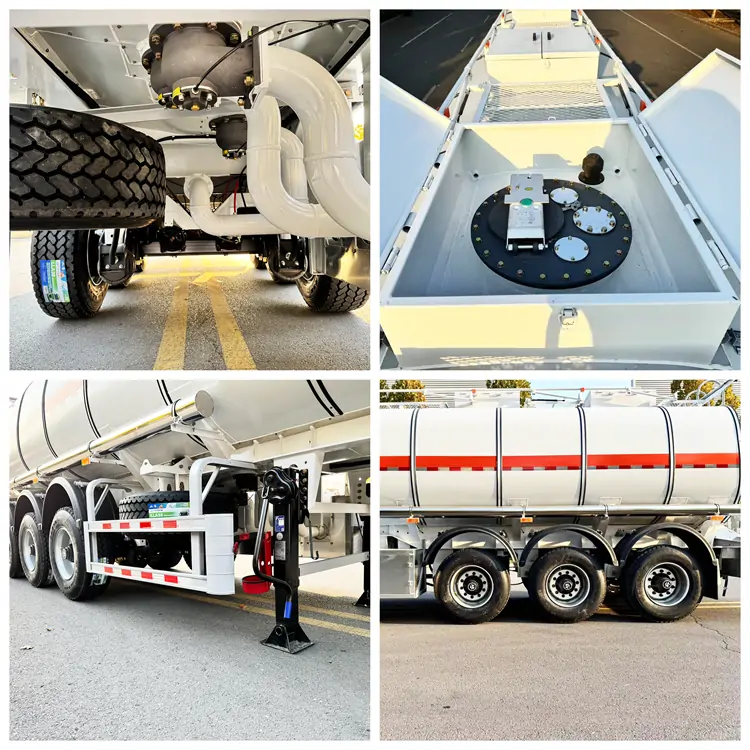
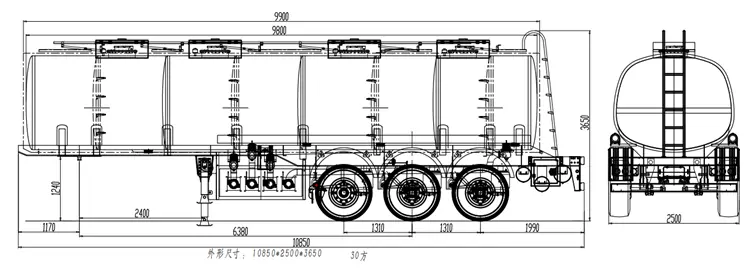
30 cubic meters insulated oil tanker trailer
Overall dimensions: 10850 * 2500 * 3650 mm
Tank capacity: 30,000 liters
Tank material: Carbon steel
Tank body thickness: 5mm
End plate thickness: 6mm
Landing gear: FUWA
Axles brand: INTAI/FUWA/BPW (Optional)
| Type of medium | Fuel Characteristics |
| Crude Oil | The crude oil has a high wax content, so it must be transported under insulation to prevent crystallization. |
| Heavy Oil | At normal temperature, its viscosity is extremely high. The fluidity can only be achieved when the temperature is maintained between 60°C and 90°C. |
| Bitumen | The temperature must be maintained above 150°C in order to carry out the loading and unloading process. |
| Tar oil | The alkanes contained in kerosene tend to crystallize under low-temperature conditions. |
| Vegetable oil | During extremely cold winters, the transportation of bulk edible oils also requires slight insulation to prevent them from solidifying. |
The advantages of the Insulated Oil Tank Trailer: